




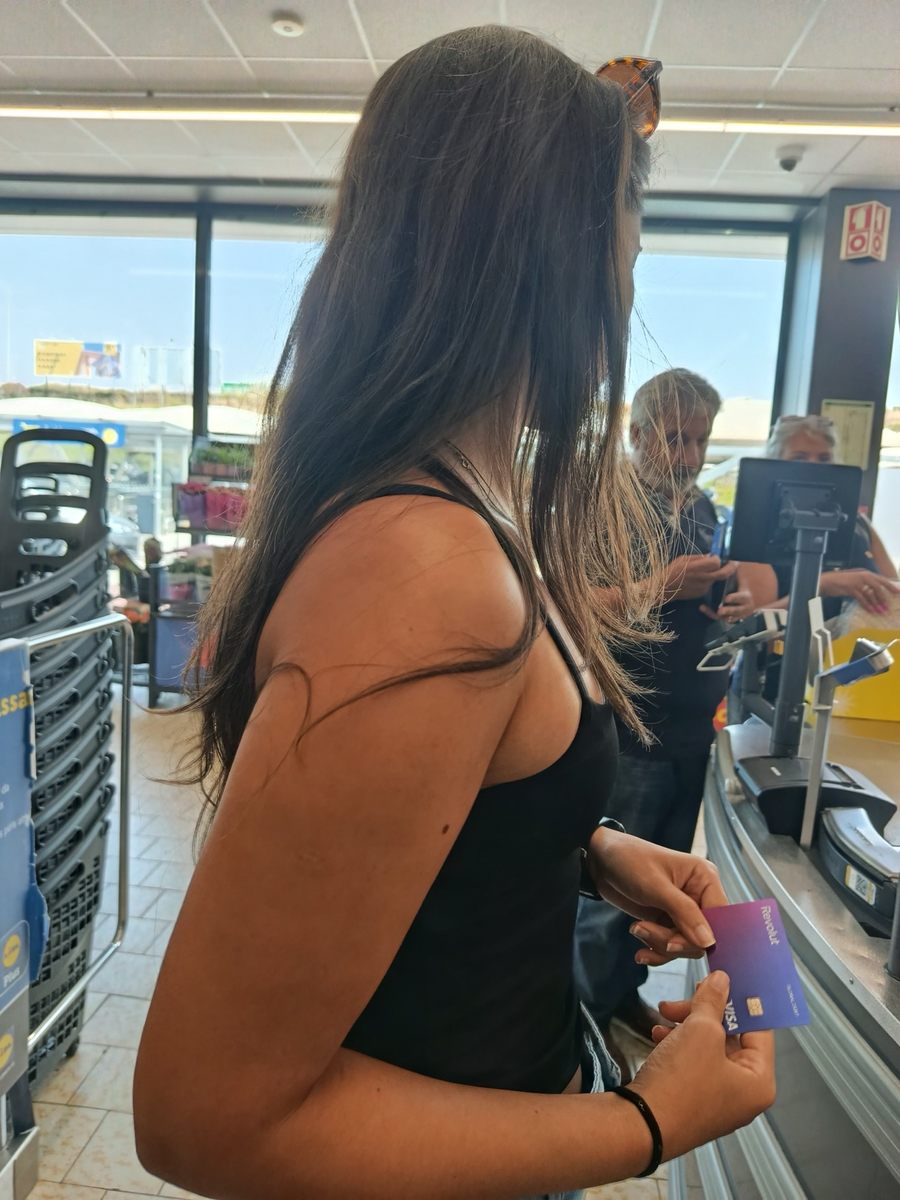
The day Revolut really earned my trust was in a supermarket in Montenegro. We were having trouble paying with other cards, including Wise and Nomad, but our Revolut card went through without a problem. It wasn’t a dramatic travel disaster, just an everyday purchase. But when you’re travelling, being able to pay for groceries matters a lot more than a long list of advertised features.
So, is Revolut worth it for travel? For me, yes. I’ve travelled to around 25 countries overall and have been using Revolut since 2024. That doesn’t mean I’ve tested the card in all 25 countries, but it has become my main travel account, including during trips to the UK, Portugal, Montenegro and Türkiye.
This Revolut travel card review is based on what I’ve actually experienced: using the virtual and physical cards, exchanging currencies, paying abroad, finding ATMs, and learning which fees to check before a trip.
Revolut Travel Card Review: How I Started Using It
I didn’t sign up for Revolut because I had researched every travel card on the market. I needed to receive a payment from someone who had a European account, and Wise wasn’t working for that particular transfer. The person already used Revolut, so I opened an account.
At that point I didn’t even have Nomad. But I soon noticed how widely Revolut was used, especially in Europe. The app felt intuitive, payments worked smoothly, and I liked the security features and card controls. Little by little, it became part of my everyday routine while travelling.
How I Use Revolut Abroad
Revolut is now the account I use most for day-to-day spending when I’m travelling. I usually pay with my virtual card through Apple Pay. For groceries, cafés and other contactless purchases, I just use my phone.
I also carry the physical card for times when my phone isn’t available or when I need an actual card. In my experience, both have worked well. Revolut supports eligible virtual cards through Apple Pay and Google Pay, although virtual cards can’t be used for regular ATM withdrawals. You can check the current details in Revolut’s virtual card guide.
Adding money and converting currencies
My account is based in Brazil, so I normally add money using Pix. I haven’t been charged for that in my own experience. Bank transfers are another available option, but funding methods and fees depend on the country where your account is registered.
I generally convert money into the local currency before spending it. The nice part is that I don’t need to do this days in advance. If I need more money, I can usually add it and make a conversion in the app in less than two minutes.
What I appreciate most is that I can see the exchange rate, any applicable fee and the amount I’ll receive before confirming. I haven’t had an unpleasant surprise with a conversion so far. That’s my experience, though, not a guarantee that every exchange will be free or instant.
The Time Revolut Worked When Other Cards Didn’t
One of my clearest memories of using Revolut is from Montenegro. We had trouble paying at some places with Wise and Nomad cards. Then we tried Revolut at a supermarket, and the payment was accepted immediately.
That made me trust Revolut more, but I wouldn’t take it as proof that it works at every shop, or that the other services never work. Card acceptance can vary depending on the terminal, merchant and transaction. It was simply a moment when Revolut was the one that worked for us.
It’s also why I still think carrying a backup payment option is important, even if you love your main card. I mention the other travel tools I use in my best apps for digital nomads guide, but this review is specifically about my experience with Revolut.
Revolut Exchange Rates and Fees: Is It Actually Cheaper?
I’ve compared Revolut with other services, including Wise, when I needed to exchange money. In one comparison, Revolut gave me a better result for the conversion I wanted to make. It was one more reason to keep using it as my main account.
But I wouldn’t claim Revolut is always the cheapest. The currencies, timing, plan and any additional charges can change the outcome. I would compare the final amount received after fees, not just the advertised exchange rate.
Fees on my Brazil-based Standard plan
I use a Revolut Standard account registered in Brazil. Here are the published Standard rules I checked on 10 November 2026. They are useful context for my experience, but they do not apply automatically to accounts registered in other countries.
| Transaction | Published Revolut Standard terms in Brazil |
|---|---|
| Monthly subscription | No monthly plan fee. |
| Adding BRL from a Brazilian bank account | No Revolut top-up fee; the sending bank could charge separately. |
| Converting BRL to foreign currency | The first R$1,000 per monthly cycle falls within the published exchange-fee allowance. Beyond that, the stated additional fee is 1.4% for BRL to foreign currency. |
| Converting foreign currency to BRL | The same monthly BRL exchange allowance applies. Beyond it, the stated additional fee is 1.0%. |
| Converting between two foreign currencies | On weekdays, the Standard fair-usage allowance is R$10,000 per month, with an additional 0.5% fee above it. A 1% weekend fee can also apply to exchanges between foreign currencies. |
The important distinction is that conversions involving Brazilian reais have different rules from conversions between two foreign currencies. You can verify the latest figures and exceptions on Revolut’s official Standard fees page for Brazil. If you live somewhere else, check the fee schedule for your own country instead.
Using Revolut at ATMs Abroad
I’ve withdrawn cash using Revolut during my travels and don’t remember any unexpected problems or charges. But fees can depend on the country, the ATM owner and your plan.
For example, the published Standard terms for Brazil allow up to R$1,600 or five ATM withdrawals per rolling month, whichever comes first, without Revolut’s own withdrawal fee. After that, Revolut lists a fee of 2% or R$6, whichever is higher. The ATM operator may charge an additional fee, and currency exchange costs may apply too. Check your current limits in the app before withdrawing.
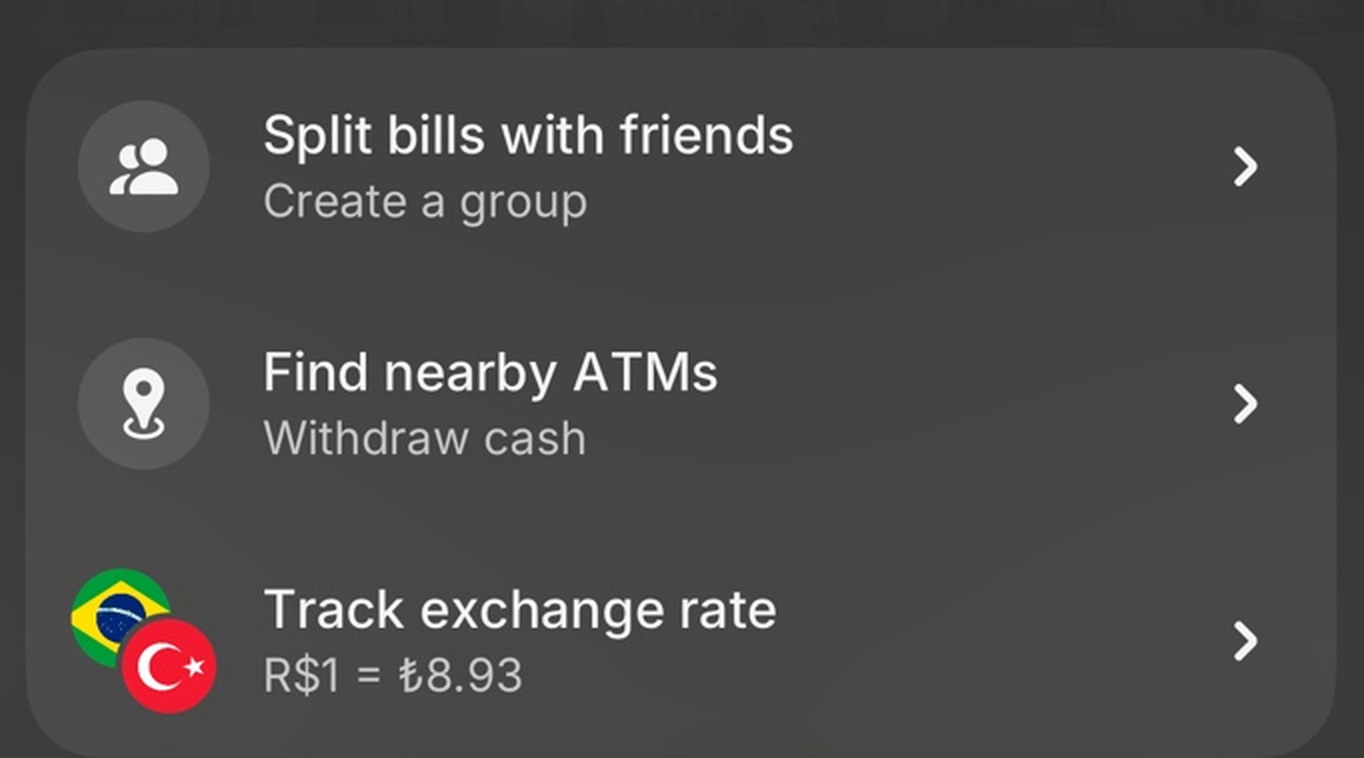
There’s also a feature I find useful when I need cash: Find nearby ATMs in the Revolut app. It shows cash machines in your area, which is handy when you’ve just arrived in a place you don’t know. Revolut explains the feature in its ATM locator guide.
During my recent time in Türkiye, I haven’t needed to withdraw cash at all. Every business where I’ve tried to pay has accepted my Revolut card so far. That’s not a promise that everywhere in Türkiye is cashless, just what has happened on this trip.
One ATM tip worth knowing: if a cash machine offers to convert the withdrawal into your home currency, check the rate carefully. Revolut generally advises choosing to be charged in the local currency rather than accepting a potentially expensive conversion by the ATM operator.
What I Like About Revolut, and What I’d Watch Out For
- Easy everyday payments: I use my virtual card through Apple Pay most of the time.
- A physical backup: I can still pay when I don’t have my phone nearby.
- Quick currency exchange: I can normally top up and convert money when I need it.
- Clear exchange information: the app shows the rate, any fees and the final amount before confirmation.
- Useful travel tools: I like being able to locate nearby ATMs and see spending information in the app.
I haven’t personally had a bad experience with Revolut so far. That doesn’t mean the service has no downsides. Exchange allowances can be exceeded, ATMs can charge fees, cards can be declined, and certain features vary by country. I still keep another payment option available when travelling.
My Main Tip: Open Your Revolut Account Before Your Trip
If I could give someone just one practical tip, it would be to open the account early enough for the physical card to arrive. Mine took around 30 days to reach me in Brazil. That’s what happened to me, not an official delivery estimate for every customer or destination.
A virtual card may be available sooner once your account is ready, but I wouldn’t plan a trip assuming the virtual card can do everything. If you expect to withdraw cash or want a backup for your phone, make time for the physical card to arrive.
Can You Get a Revolut Card at the Airport?
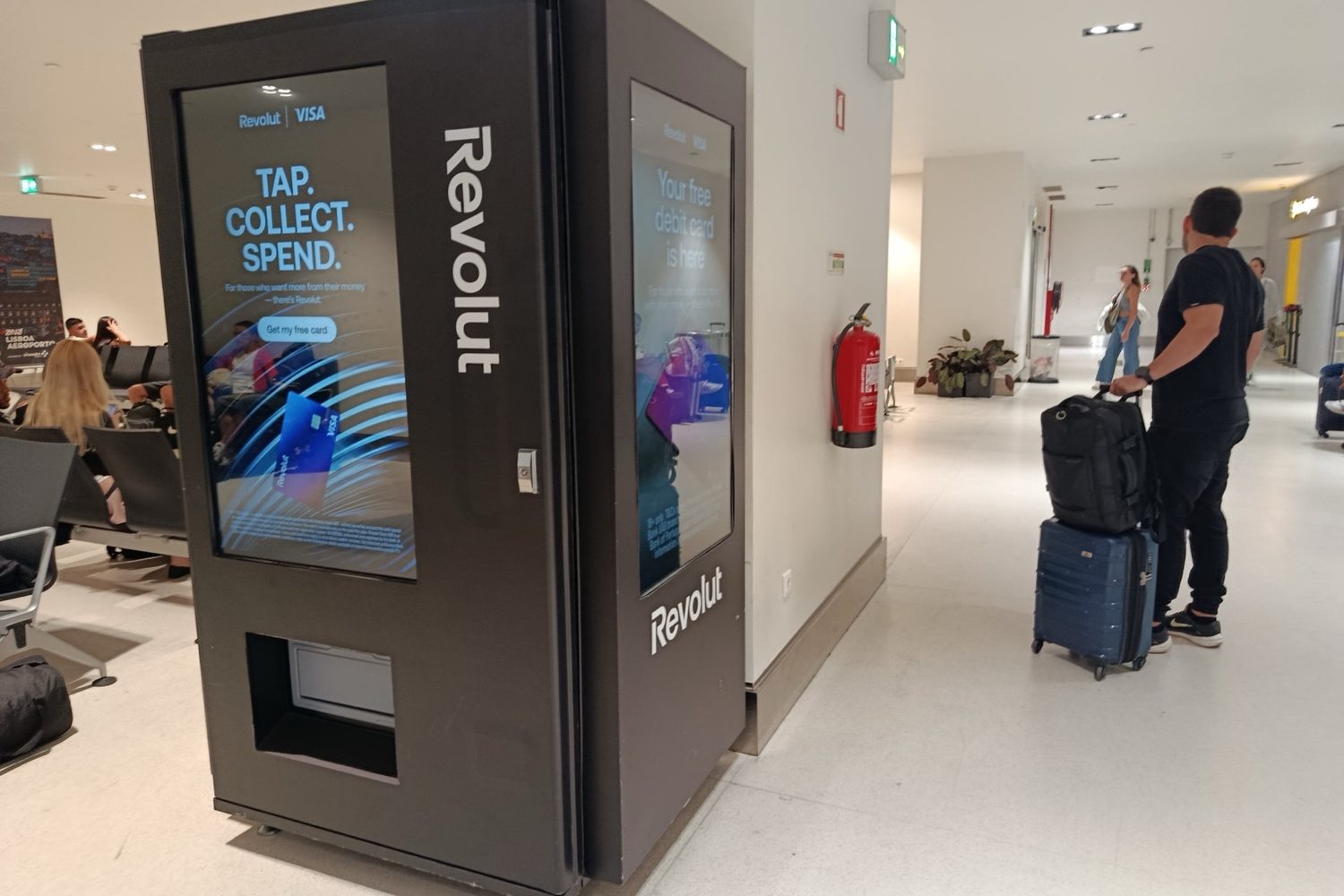
While travelling, I spotted a Revolut card vending machine at an airport. That’s the machine in the photo at the top of this article. I didn’t collect a card from it myself, but it caught my attention because I’d had to wait about a month for my physical card to arrive back home.
These kiosks are real. Revolut has installed card dispensers at Porto Airport, and Lyon Airport’s official website explains how eligible travellers can pick up a card, scan its QR code and link it to a new or existing Revolut account. So if you’re already on a trip, a kiosk might be a convenient way to get a physical card without waiting for a delivery.
There are important limitations: not every airport has a machine, not every account or country of residence is necessarily eligible, and I haven’t personally tested whether a card from a European kiosk can be linked to my Brazil-based account. I wouldn’t rely on finding a kiosk at the last minute. Think of it as a possible extra option, not a replacement for ordering your card ahead of time.
To check whether Revolut is available where you live and review the current plans, go to the official Revolut website. This is a regular website link, not a personal referral offer or a promise of a sign-up reward.
Who Is Revolut Good For?
I think Revolut is worth considering whether you travel occasionally or live on the road. You don’t need to be a digital nomad to appreciate an app that makes payments and foreign currency exchanges easier to manage.
But the best choice depends on your own situation: which country you live in, which currencies you use, how often you withdraw cash and what other cards you already have. I would check those details before deciding.
Revolut Travel Card Review: My Final Verdict
I started using Revolut in 2024 because I needed to receive a transfer from someone in Europe. I kept using it because it proved convenient in real life. Today it’s my primary travel account, and I’ve been happy with both the app and the way the card has worked on my trips.
That supermarket payment in Montenegro says a lot about why I like it. I don’t need a travel card to be perfect. I need it to make everyday travel easier, be transparent about fees and work when it’s time to pay. So far, that’s what Revolut has done for me.
My advice is to give Revolut a serious look, compare the fees for your own country, open your account before your departure and keep a second payment option. That’s the approach I’ll continue using myself.