
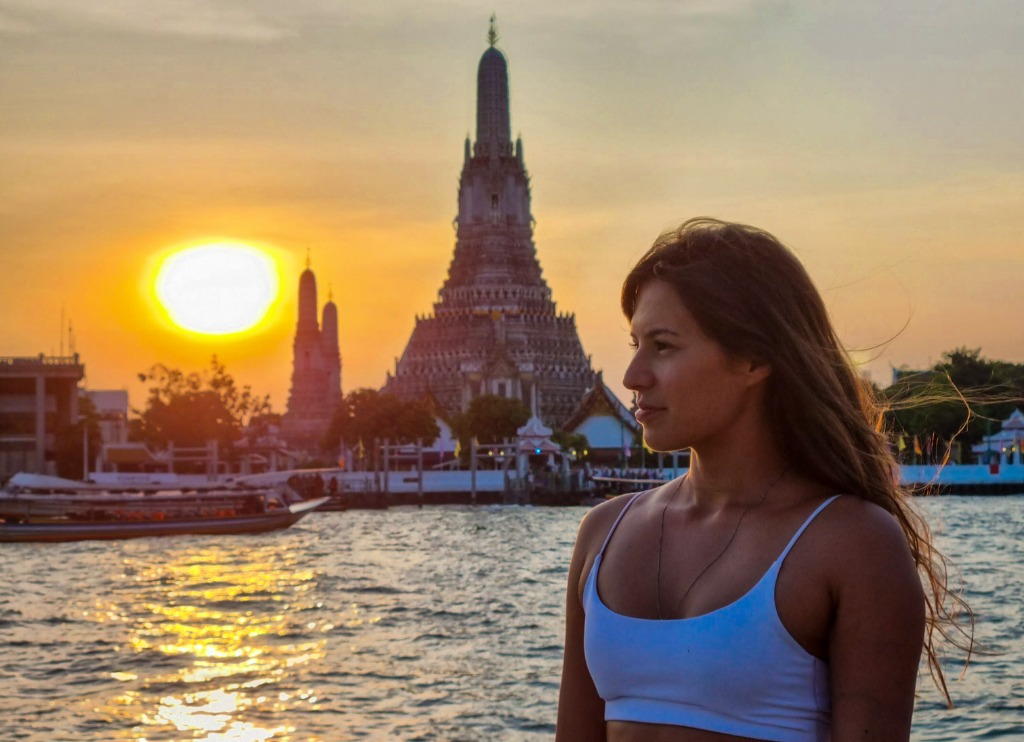

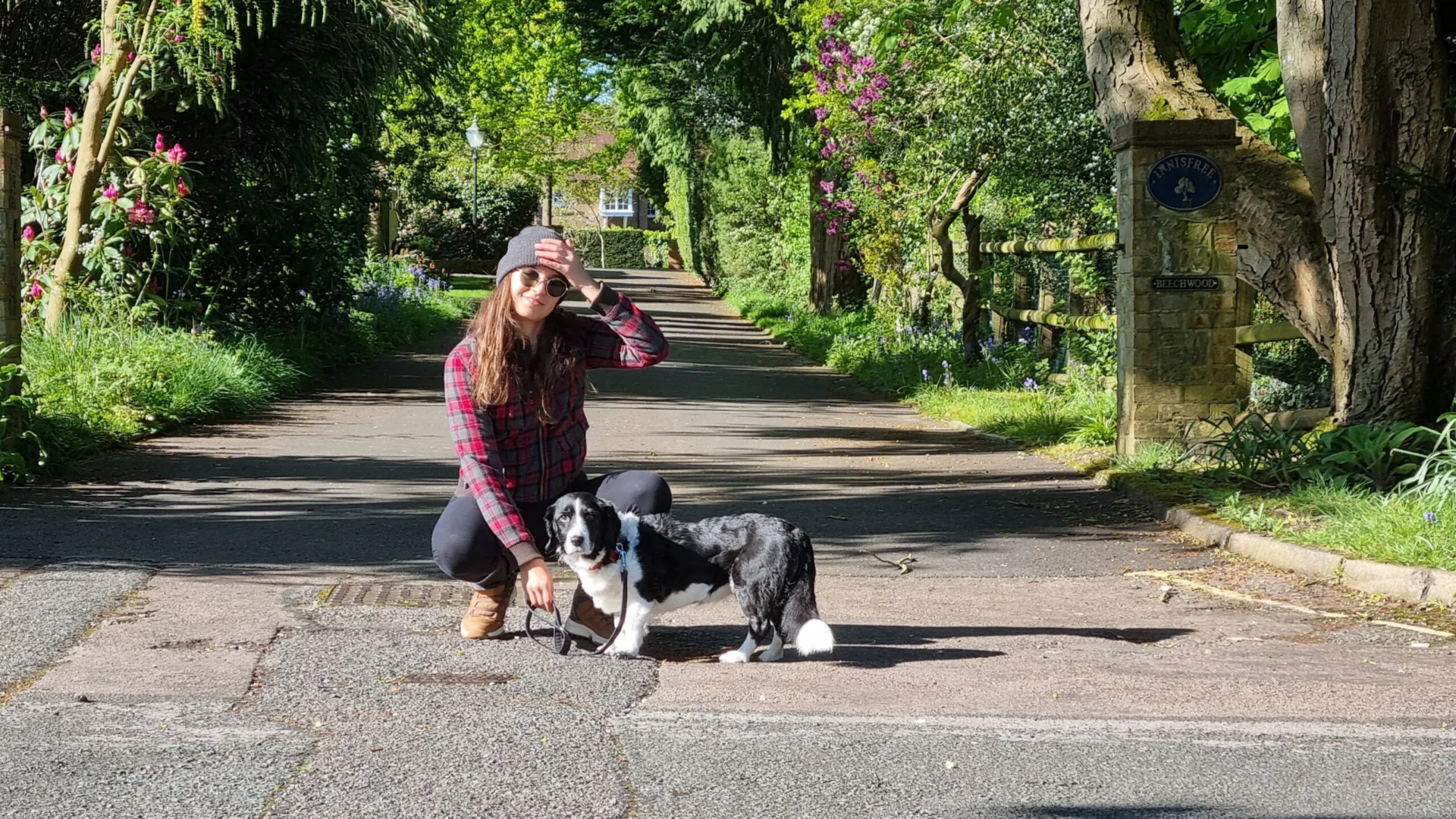

The first time I tried living in Thailand as a digital nomad, my routine was completely chaotic.
I was still working for a company in Brazil, and the time difference was close to ten hours. While Thailand was waking up, my working day had not even started. I often stayed awake until the middle of the night, slept during part of the day and felt as though my body and my professional life were operating in two different countries.
The problem was not Thailand.
The internet worked, we found suitable accommodation, and daily life was much easier than I had expected. The real problem was trying to live in Asia while continuing to follow Brazilian office hours.
Later, after leaving that job and starting my own business, my experience changed completely. I could choose when to work, use rainy days to focus on my projects and explore when the weather was good.
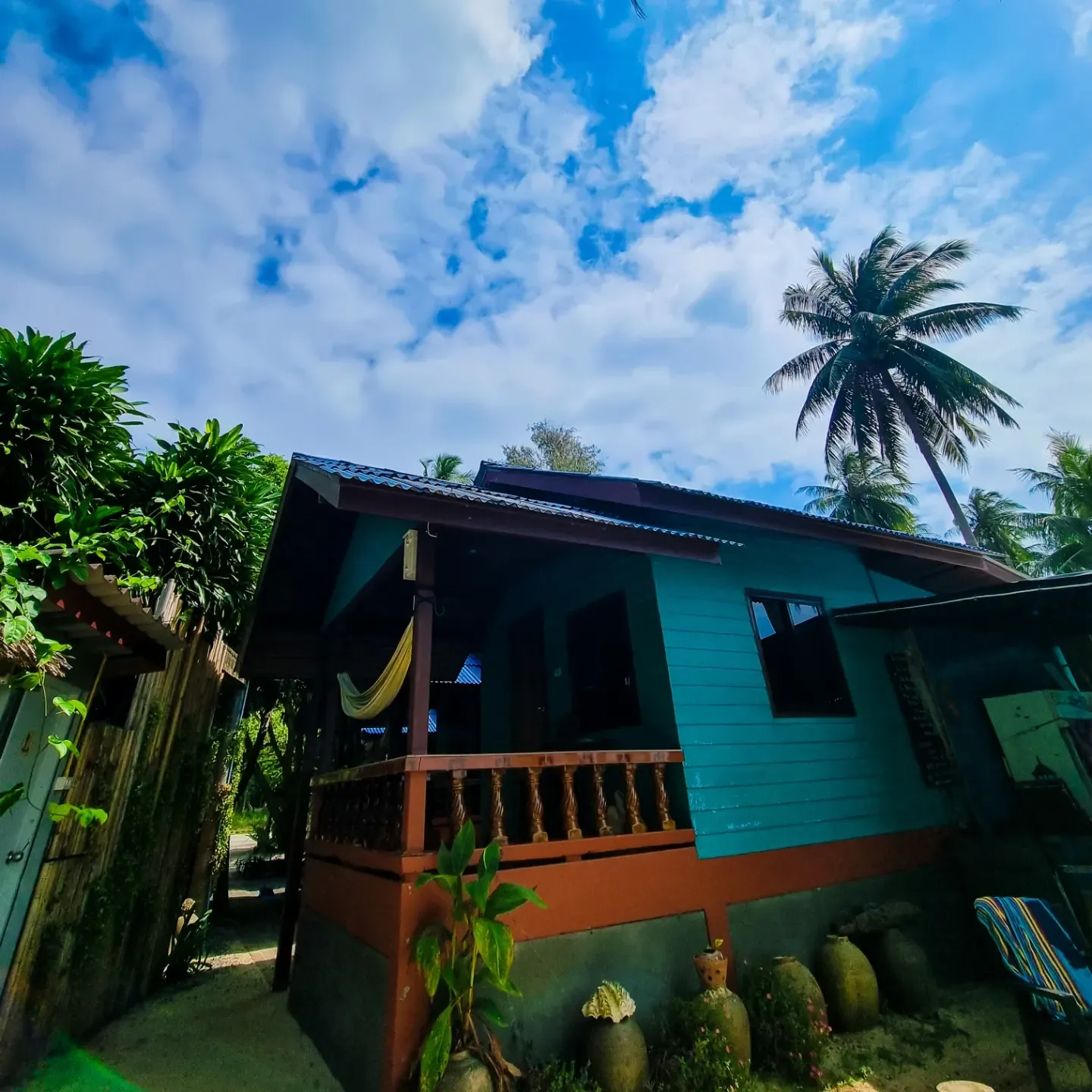
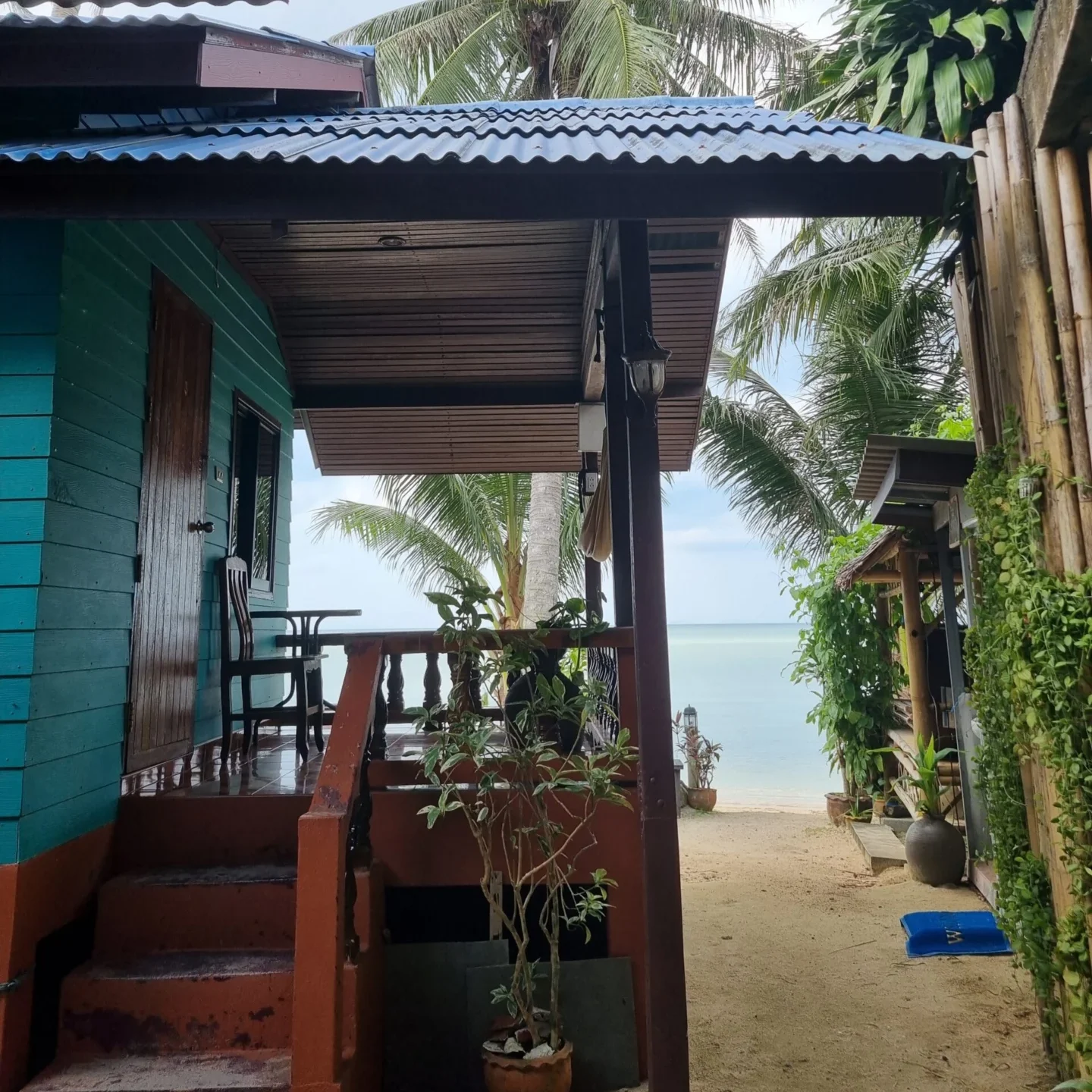
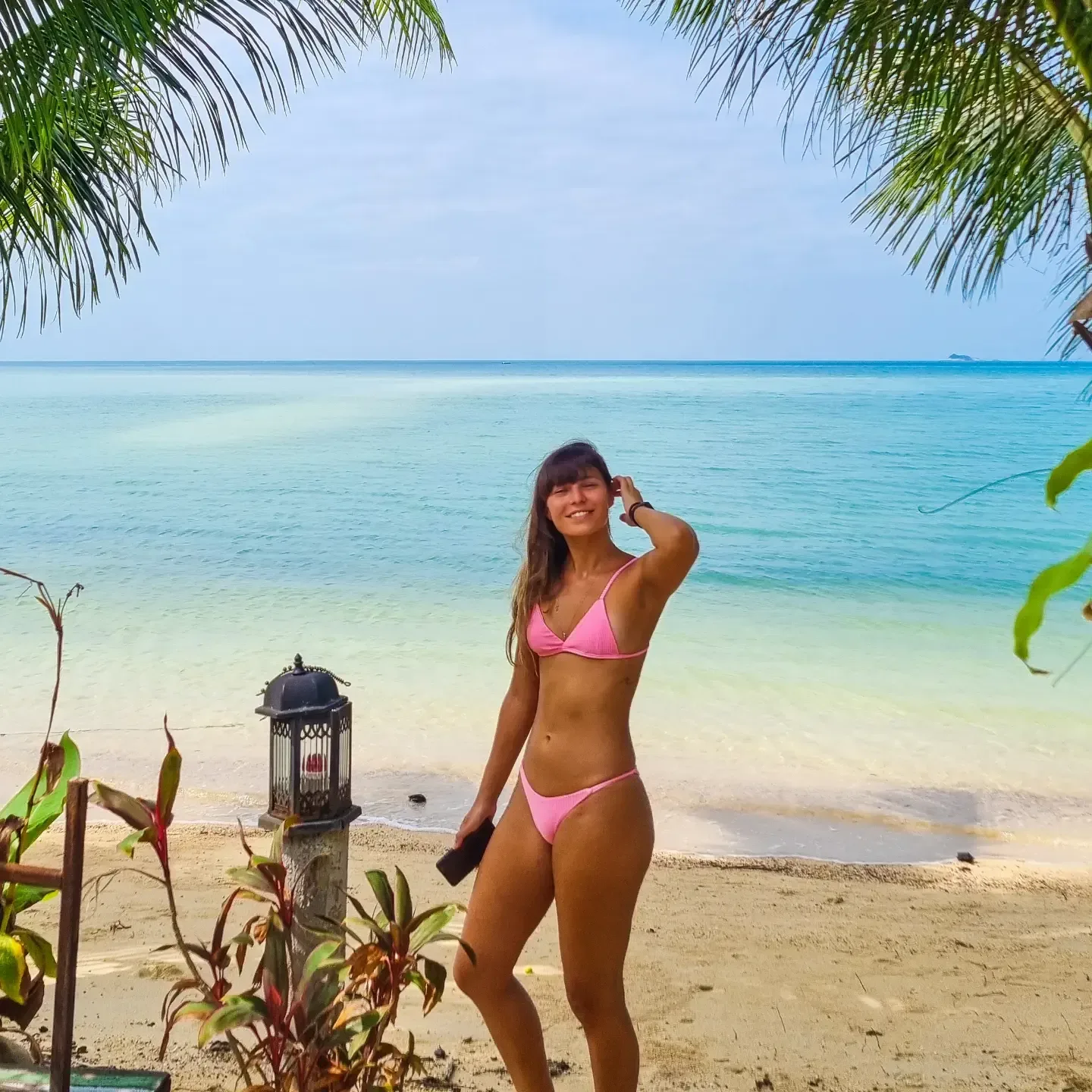
At one point, Math and I spent around a month and a half in a rustic bungalow in Koh Phangan, with the sea almost in our backyard. We would wake up early, take the scooter to the gym, return for breakfast, work for a few hours, have lunch by the sea and finish the day watching the sunset.
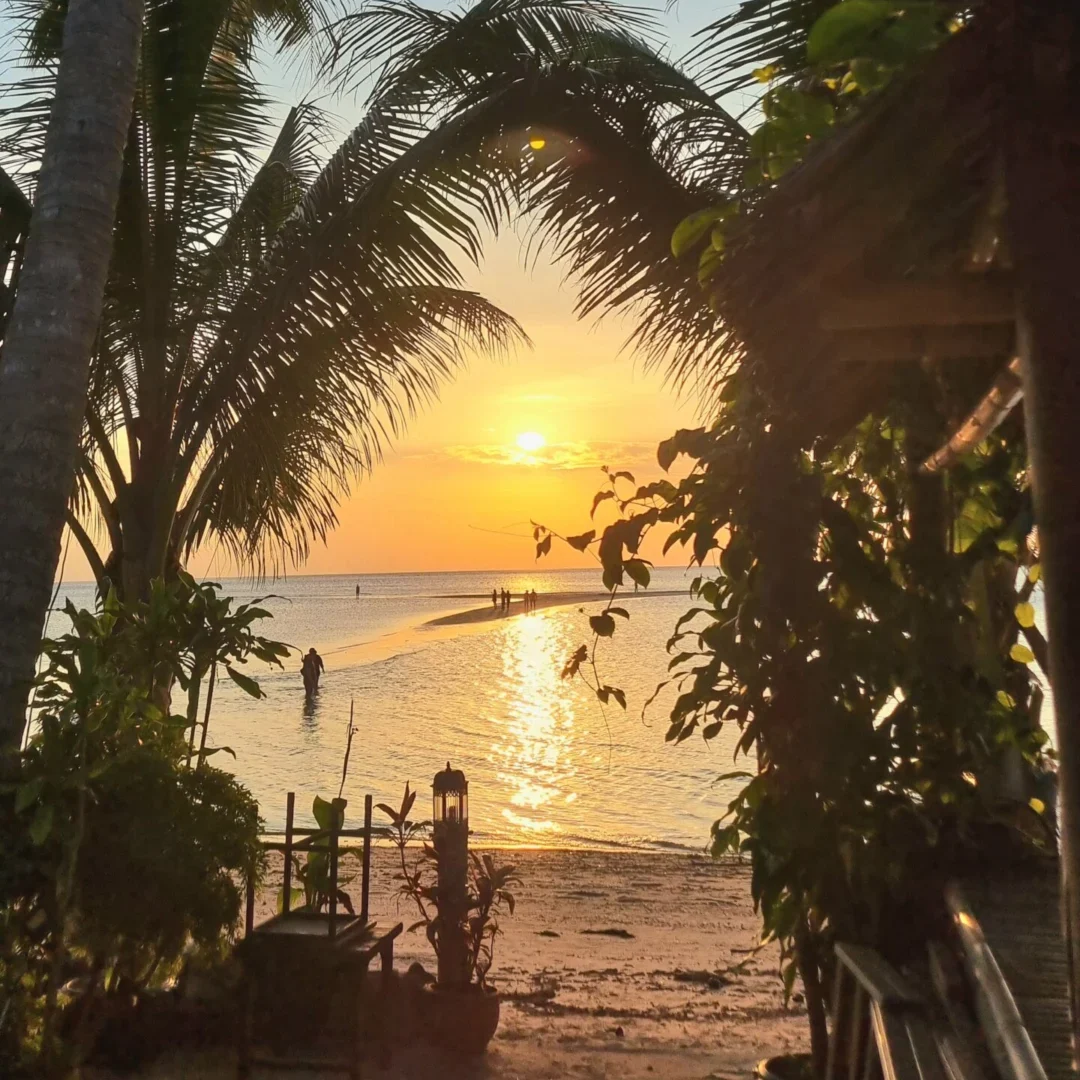
That was when Thailand started feeling less like a destination we were visiting and more like a place where we were actually living.
I first visited Thailand in 2022. And travelled around Asia until October 2023, moving in and out of Thailand several times. Altogether, we spent around six or seven months in the country.
We stayed in Bangkok, Krabi, Phuket, Chiang Mai, Koh Phangan, Koh Samui and Pattaya, and also made shorter trips to Pai and Chiang Rai.
So, is living in Thailand as a digital nomad actually a good idea?
My honest answer is yes. Thailand is one of the best countries I have experienced for this lifestyle. But your experience will depend heavily on your working hours, the type of accommodation you choose and the routine you want to create.
Is Thailand Actually Good for Digital Nomads?
In my experience, yes.
Thailand is very prepared to receive people from other countries. You notice it not only in tourist attractions but also in ordinary daily life.
It is usually easy to find accommodation, mobile internet, gyms, cafés, supermarkets, transport and services accustomed to dealing with foreigners.
Even in places where people did not speak much English, they normally tried to communicate. They used gestures, translation apps or simply found another way to help.
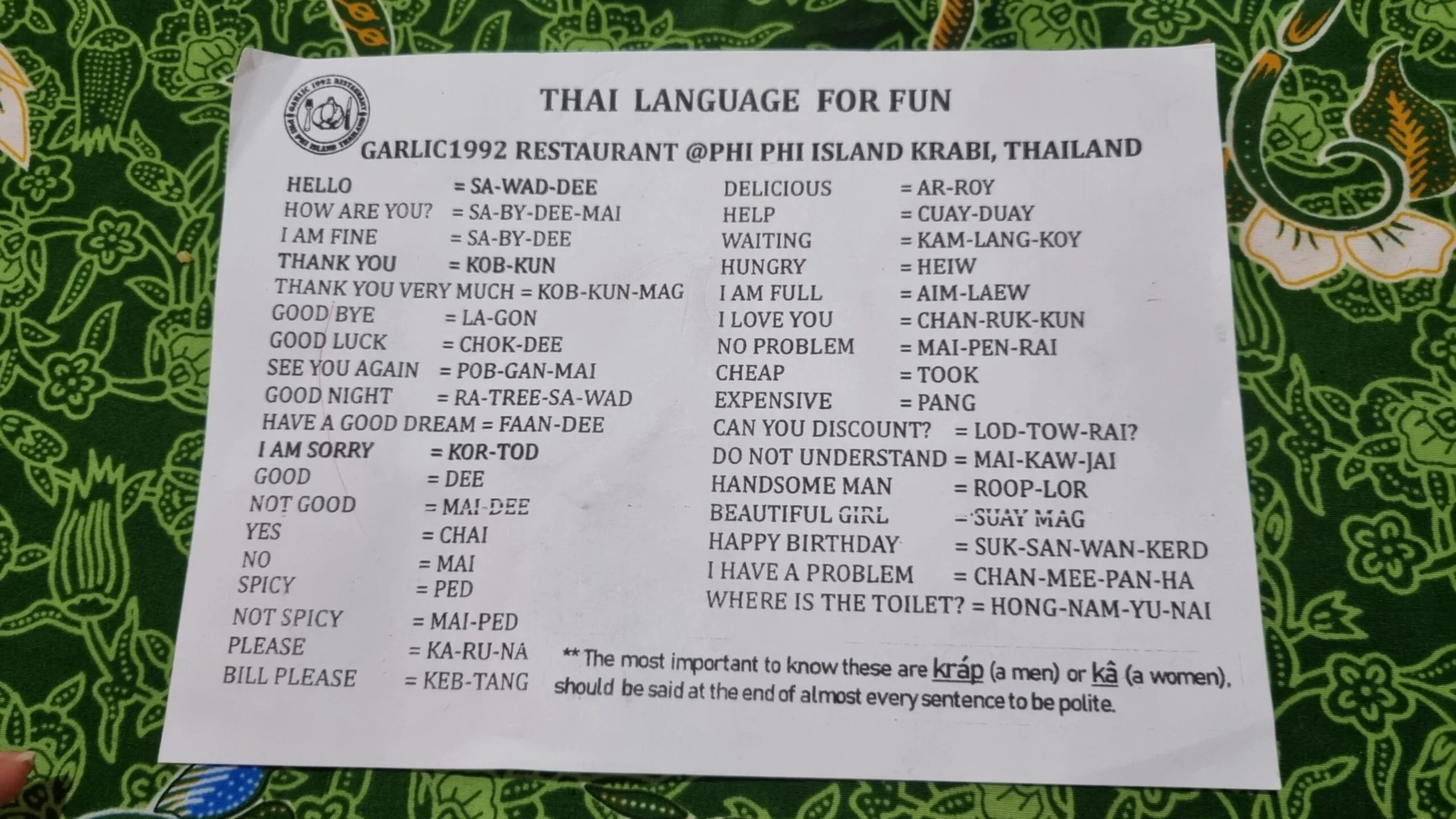
The cultural difference is significant, especially for someone arriving from Brazil or another Western country, but I never felt that it made daily life impossible. Thailand is very different from what I was used to, while still being relatively easy to navigate.
Another thing I really like is that Thailand can work for completely different budgets and comfort levels.
You can live simply, stay in a basic bungalow and eat inexpensive local food. You can also choose modern apartments, comfortable resorts, international restaurants and a much more luxurious routine.
You can have both worlds.
The experience depends less on one universal “digital nomad budget” and more on the type of life you want to create.
Your accommodation, location, food habits, transport and travel pace will determine a large part of your spending.
And living in Thailand as a digital nomad does not mean being a tourist every day.
Most days are still normal days.
You work. You exercise. You buy groceries. You cook. You wash your clothes. You rest. You spend entire days without visiting an attraction.
The difference is that your normal life is happening in Thailand.
For me, that is one of the best parts of slow travel.
The Time Zone Was Harder Than Living in Thailand
Before going to Thailand, I knew there was a large time difference between Asia and Brazil.
What I did not fully understand was how much it would affect my daily routine.
When your job has fixed working hours, it is not enough to say that you can work remotely from anywhere. You need to calculate what “anywhere” will actually look like in local time.
In my case, I sometimes had to stay awake until very late at night. Then I would sleep during the day and miss many of the hours when I could have enjoyed where I was.
My body was living in Thailand, but my work was still organised around Brazil.
That made it difficult to create a healthy routine. It affected my sleep, my energy and the way I experienced the country.
This is my main warning for anyone considering a similar move.
If your work is asynchronous or you control your schedule, Thailand can be an excellent base. But if you need to attend calls and follow fixed office hours on the other side of the world, the destination may be easy while your routine is still exhausting.
After I became self-employed, everything changed.
I could decide which days I wanted to work, move tasks around and take advantage of the weather instead of treating every weekday in exactly the same way.
That flexibility was what allowed me to experience Thailand in a completely different way.
Slow Travel Helped Us Create a Real Routine
Because we spent months in Thailand, we did not feel pressure to experience everything immediately.
If it rained, we worked.
If the weather was beautiful and there was somewhere we wanted to visit, we could take the afternoon or the day off.
We did not need to fit the entire destination into one weekend.
That did not harm my productivity. In many ways, it helped.
When you know you will be staying for longer, you stop treating every sunny day as your only opportunity to explore. There is less urgency and more space to create a routine that actually works.
Koh Phangan was the best example of that for us.
We stayed in a beachfront bungalow for around a month and a half. It was probably one of the most rustic homes we had in Thailand, but it gave us everything we needed.
There was a huge gym nearby that we really liked. We would wake up early, take the scooter there, train and return to the bungalow.
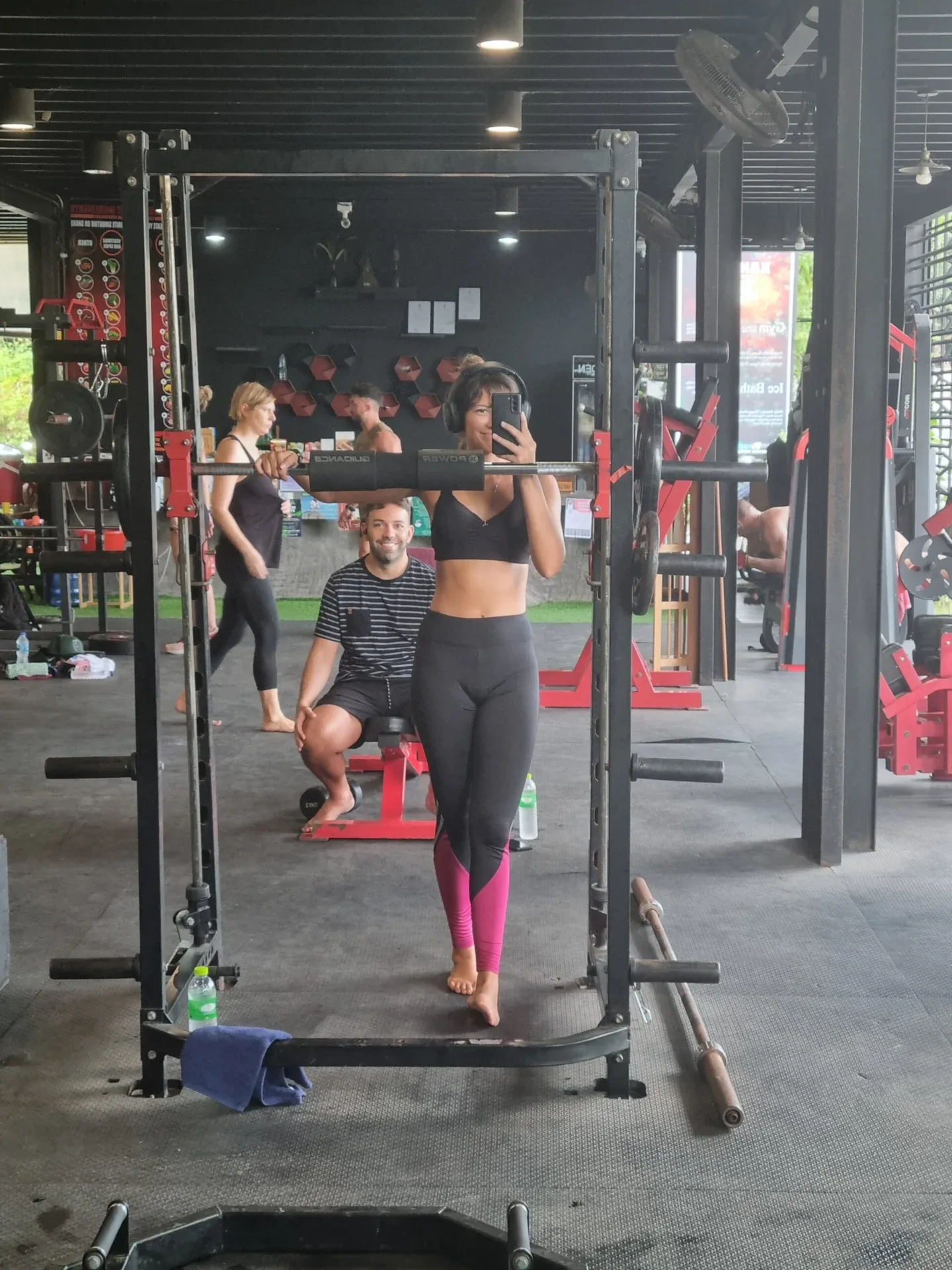
After that, we would have breakfast and start working. Sometimes we ate breakfast or lunch facing the sea.
At the end of the day, we could watch the sunset near our bungalow or ride for around ten minutes to Zen Beach. People often gathered there in the evening, sometimes with someone playing the guitar while everyone watched the sun go down.
There were also events and live-music nights around the island. We attended the Full Moon Party during New Year, which was a completely different side of Koh Phangan.

But that was not what every day looked like.
Our daily life was work, exercise, meals, errands and time by the sea.
It was a normal routine in a place we loved.
The Base You Choose Changes the Entire Experience
Thailand is a large country, and living in one region can feel completely different from living somewhere else.
Chiang Mai was where I saw the strongest digital nomad community.
There were cafés, coworking spaces, gyms, supermarkets and many people working online. I met several foreigners there, including Brazilians living a lifestyle similar to mine.
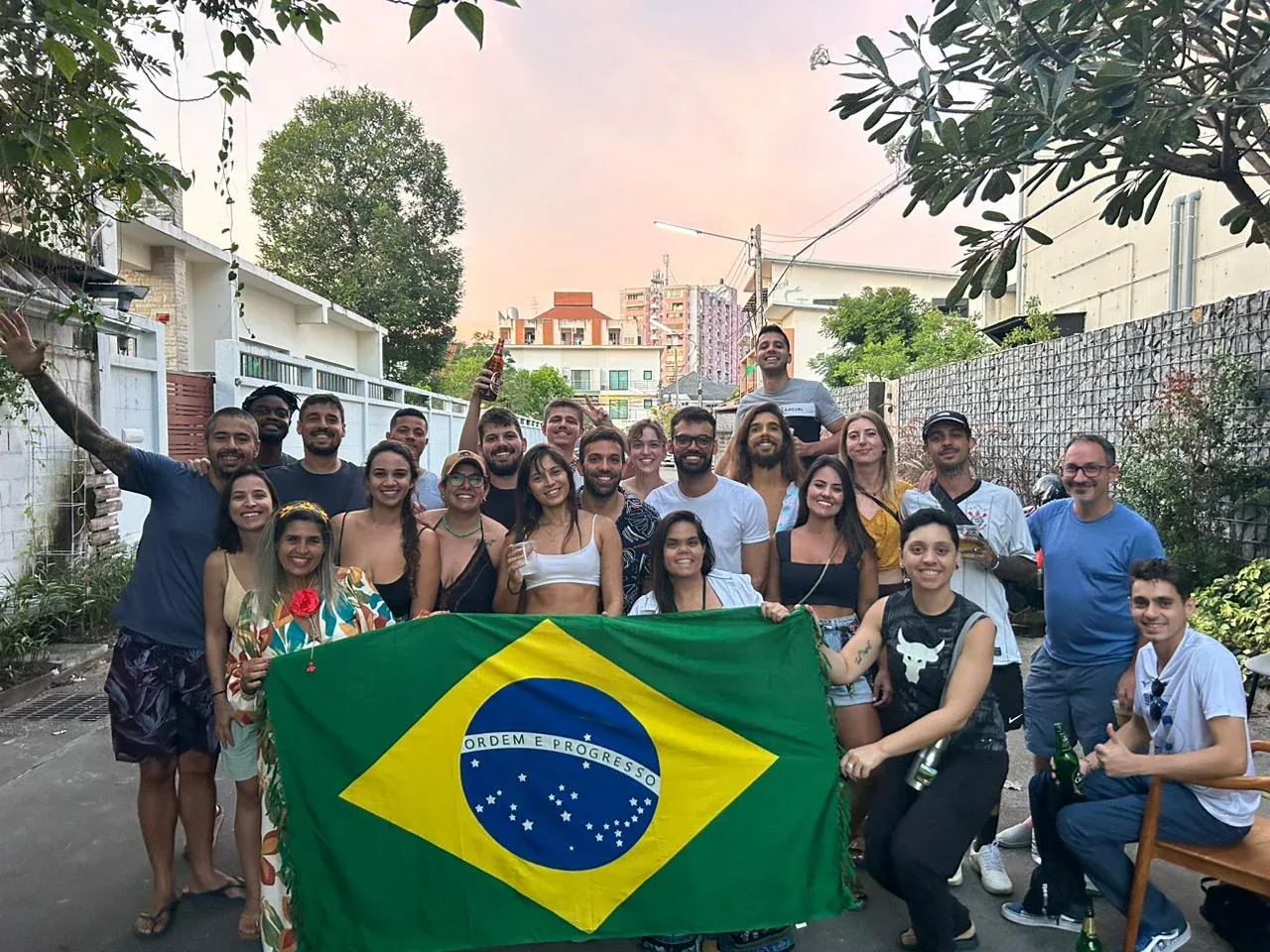
For someone who wants structure, services, a community and an easier introduction to digital nomad life, Chiang Mai makes a lot of sense.
Koh Phangan was my personal favourite, but for different reasons.
Matt and I love islands, beaches and hot weather. We did not mind living somewhere more rustic because the lifestyle around the accommodation was exactly what we wanted.
Bangkok had everything, but it felt too crowded and chaotic for me. I would visit it again, but I would not choose it as my main long-term base.
I also would not personally choose Pattaya or Phuket again.
That is not because they lacked infrastructure, accommodation or internet. I simply did not connect with those places in the same way.
This is why I do not believe there is one universal list of the best places in Thailand for digital nomads.
The best place depends on the routine you want.
Do you want coworking spaces and social events? A quiet house? Nightlife? A beach? A gym nearby? A lower-cost lifestyle? More comfort and convenience?
A destination can be beautiful and still not work for the life you need to live there.
Choosing the Right Accommodation Is More Important Than It Looks
We regularly used Booking.com, Airbnb and Agoda in Thailand.
Over time, I realised that choosing accommodation is not only about price, location and internet.
It also depends on how you work, whether you are travelling alone or with someone, how much privacy you need and how long you intend to stay.
Travelling alone and wanting to meet people
If you are travelling alone, want more social interaction and have a flexible job, a hostel, coliving space or accommodation with shared working areas may be a good choice.
You may be comfortable working from a common space, meeting other travellers and organising your day around what is available.
For some people, that social side is an important part of the experience.
I met many foreign residents and digital nomads in Thailand, especially in Chiang Mai, so choosing a more social type of accommodation can make it easier to connect with people.
Needing privacy for work
A shared environment will not work equally well for everyone.
If your job involves calls, fixed hours, confidential conversations or tasks requiring concentration, having a private room or apartment may be more practical.
I personally prefer working from home rather than from cafés and coworking spaces.
For me, having a functional place inside our accommodation mattered more than being close to a famous coworking space.
Travelling and working as a couple
Space becomes even more important when two people are working remotely.
In Pattaya, Matt and I stayed in a very small studio. The sleeping area and kitchen were essentially part of the same room.
The apartment was not necessarily bad. It was simply too small for the routine we were trying to maintain.
Both of us spent several days working there for hours at a time.
When one person had a call, needed silence or wanted to concentrate, there was nowhere else for the other person to go. We were living, working, cooking and resting in the same limited space.
Over time, the lack of space made our work routine more stressful.
That experience changed the way we evaluated accommodation.
After Pattaya, we stopped thinking only about whether a property could technically fit two people. We started asking whether it would still feel comfortable after several days or weeks of both of us working there.
A small studio may be perfectly fine for a short holiday. It can feel very different when two people are working inside it every day for a month.
What we checked before booking
Our main criteria became:
- Reliable internet for calls and video uploads.
- Enough space for two people to work.
- Accessible power sockets.
- Some separation between working and resting areas.
- A kitchen when we wanted to maintain our normal food routine.
- Enough privacy for the type of work we were doing.
- Enough space for the full length of the stay.
The working area did not need to look like a professional office. Sometimes a table and two chairs were enough.
But there is a significant difference between accommodation that looks good in photos and accommodation that supports real daily life.
We always read reviews for information about the Wi-Fi. Because we checked this carefully, we did not have any significant internet problems, even in places that felt more remote.
Having a kitchen was another important criterion for us.
Many of the accommodations we found did not prioritise cooking facilities. Eating outside the home is extremely common, and street food is widely available.
But we wanted to maintain a healthier food routine and eat more protein, so we did not want to depend on restaurants for every meal.
A kitchen was not impossible to find, but it reduced our options.
The best accommodation is not necessarily the most beautiful or the most central. It is the one that supports the routine you will actually have.
Transport, Internet and Ordinary Life
We normally rented scooters in Thailand.
That allowed us to stay outside the most touristy areas and choose neighbourhoods that felt more local. We did not need to live within walking distance of every restaurant or attraction because we could move around independently.
During our trips, the rental shops we used did not ask us for a motorcycle licence. The process was extremely simple, and I actually learned to ride while I was in Thailand.

That was our real experience at the rental counter.
It does not mean the legal, licensing and insurance requirements are irrelevant. Those are separate issues and should be checked before deciding to ride.
For someone who does not want to use a scooter, larger cities are easier.
We used Grab to request rides, and tuk-tuks and regular taxis were also available in many places. Grab continues to offer transport services across Thailand, although the exact services and coverage depend on the location. (Grab)
More remote areas can be harder without your own transport.
That does not mean you cannot stay there, but transport should influence the accommodation you choose. A cheaper home far from shops and restaurants may stop feeling convenient if every journey becomes complicated.
For mobile internet, we bought local SIM cards rather than using an eSIM.
The packages worked well for us, including when we travelled to places that felt more remote. We never felt that the mobile connection was a major problem.
We also used 12Go Asia frequently to search for and buy bus and ferry tickets when travelling between destinations.
Daily errands were generally easy.
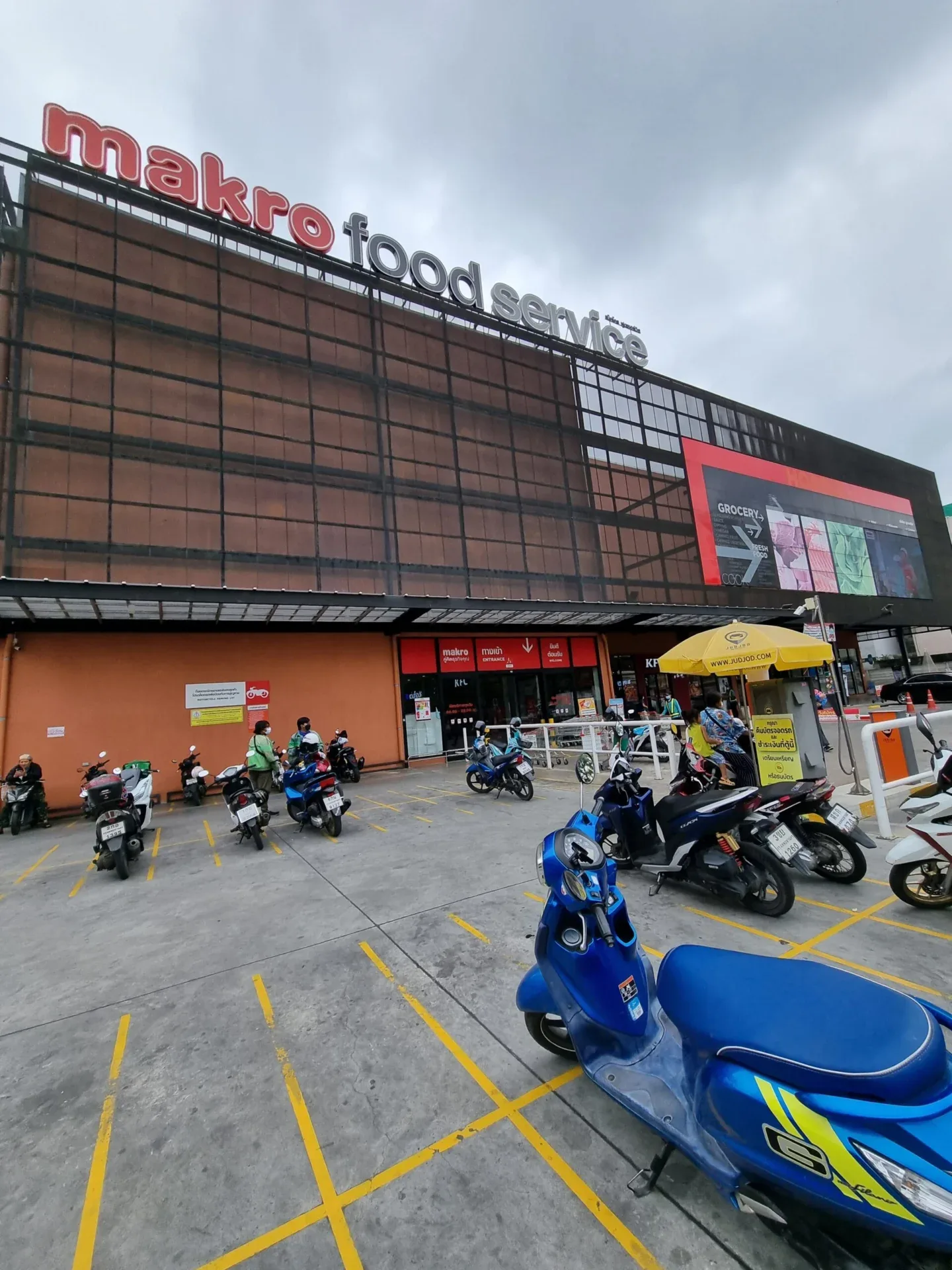
We shopped at large supermarkets such as Makro and Lotus, where we could find many of the basic foods we normally ate in Brazil.
At the same time, Thailand had night markets, street-food stalls and 7-Eleven stores almost everywhere we went.
That made it possible to alternate between cooking at home and eating outside.
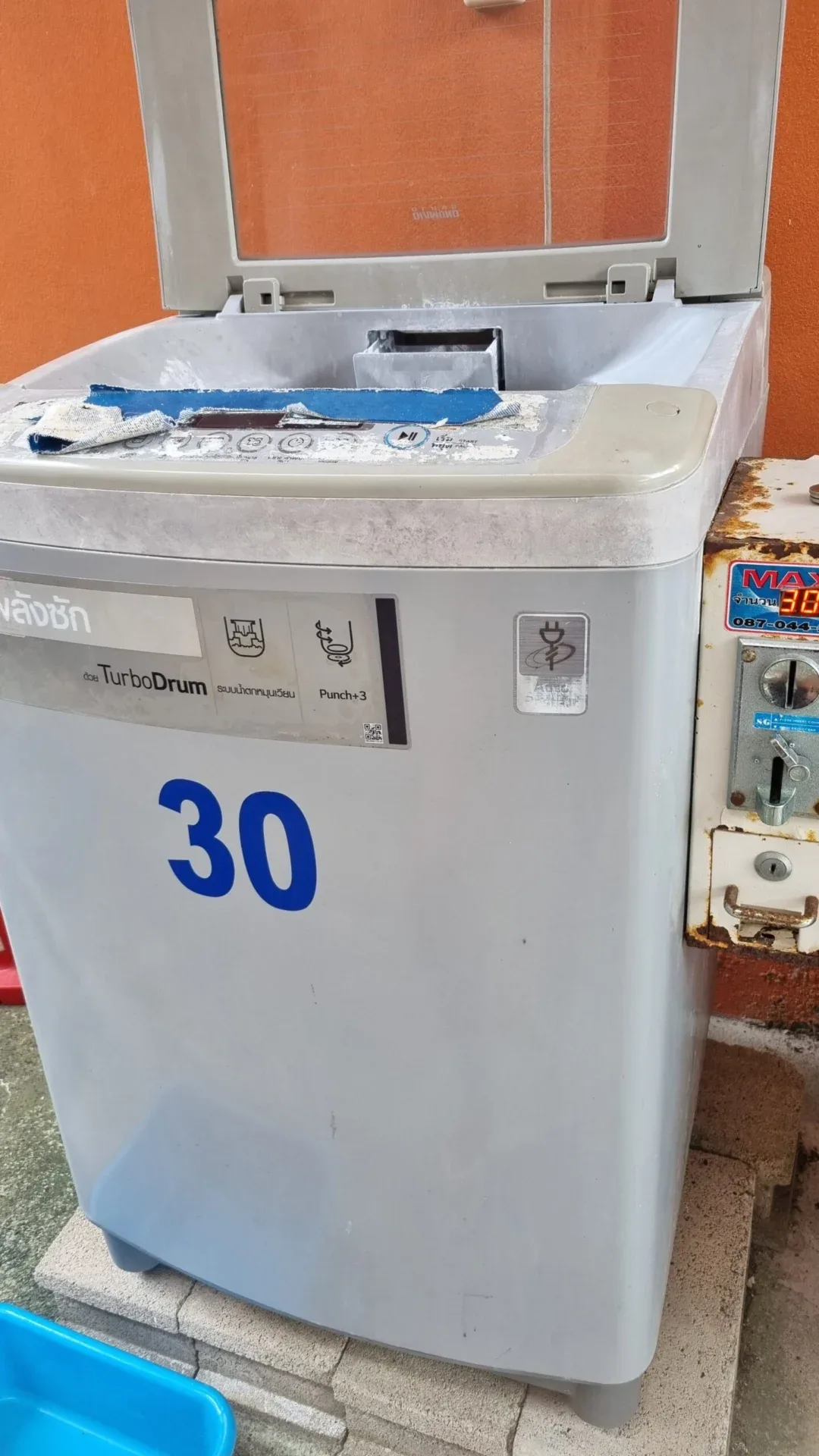
Some of our homes did not have washing machines, but coin-operated machines on the street were common. I remember paying around 20 baht at the time, although that is only an approximate memory from our trips.
These details may not sound as exciting as beaches and temples, but they matter when you are staying somewhere for months.
They determine whether normal life feels easy or unnecessarily complicated.
What I Would Check Before Moving to Thailand Temporarily
The first thing I would check is the time zone.
Do not look only at the number of hours. Convert your actual calls, meetings and fixed commitments into Thai time.
A remote job that looks flexible from home may feel completely different when your normal afternoon meeting happens in the middle of the night.
The second thing is the weather in the exact region you are considering.
Thailand is too large to treat the climate as though it were identical everywhere. Different regions can experience their rainiest periods at different times, so it is better to research the city, coast or island you actually plan to visit. (Tourism Authority of Thailand)
If you are staying for several months, a rainy period may not be a major problem. You can work during wet days and wait for the weather to improve.
But if you are staying for only a few weeks and want to explore constantly, choosing the wrong period can completely affect your impression of the destination.
I would also consider the heat.
I personally love hot weather, which is one reason island life works so well for me. Someone who struggles with high temperatures may have a very different experience.
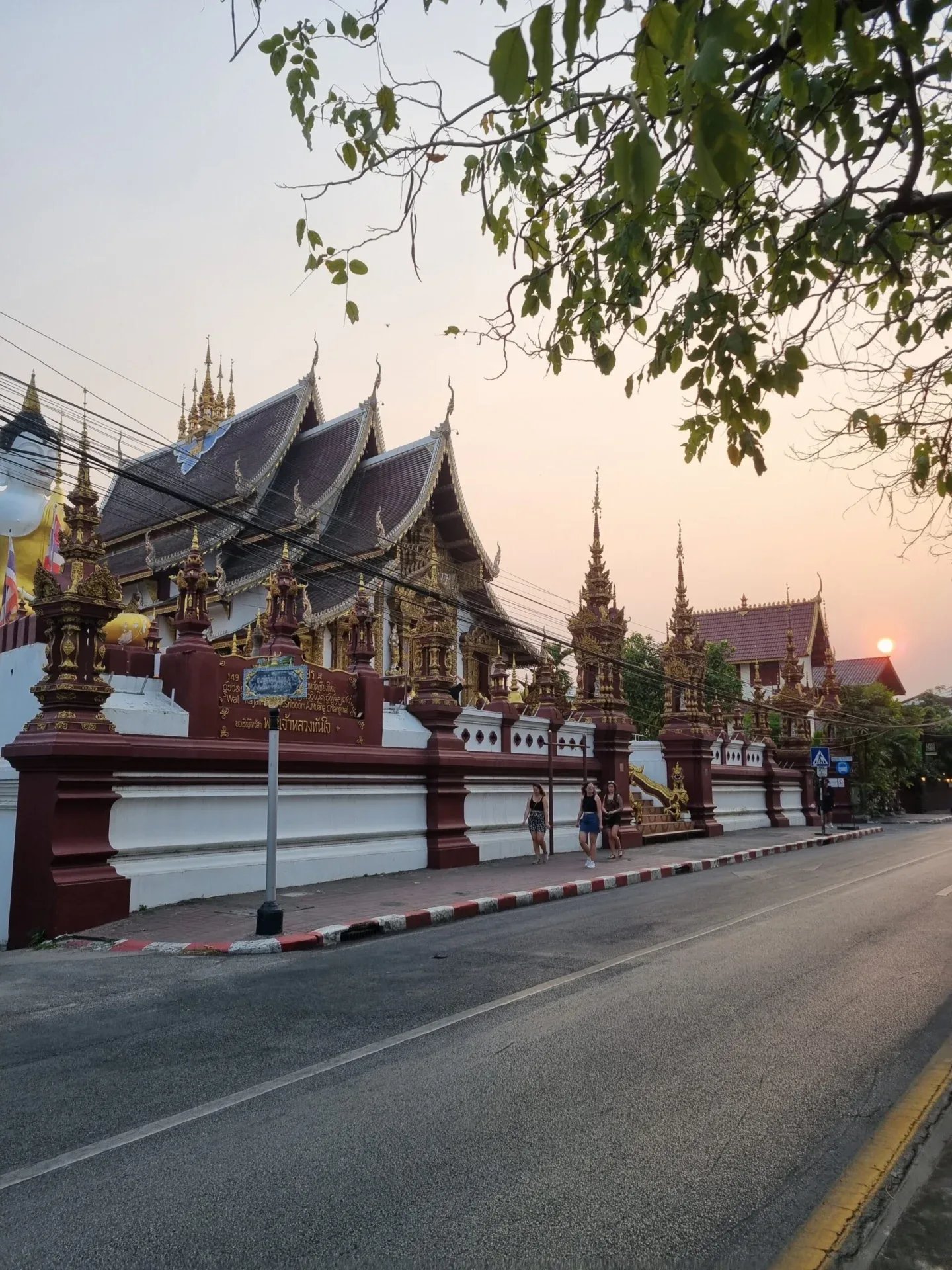
For temples, I would always carry clothing that covers me appropriately. Dress rules can vary depending on the site, but wearing suitable clothes avoids arriving somewhere and discovering you cannot enter.
Spicy food was another small challenge for me.
I do not handle it very well, but it was usually possible to request less spice or no chilli.
None of these issues made Thailand difficult to live in. They simply required planning and small adjustments.
What I Would Not Romanticise
Thailand is prepared for international travellers, but that does not mean every place offers the same level of convenience.
A remote bungalow may give you an incredible lifestyle but less workspace.
An island may have everything you need while still offering fewer transport options and services than a larger city.
A beautiful studio may become uncomfortable when two people spend every day working inside it.
A strong digital nomad community can make it easy to meet other foreigners, but it does not automatically create deep contact with local people.
We interacted with Thai people in shops, markets, restaurants and everyday situations, and they were usually very kind and helpful.
But I did not form close friendships with Thai locals.
Most of the people I met socially were foreigners, expats or other digital nomads, particularly in Chiang Mai.
Someone wanting deeper cultural immersion may need to make a more deliberate effort instead of remaining only inside digital nomad spaces.
The main limitation for me was still the time zone.
Thailand itself gave me practically everything I needed. The most difficult part was trying to maintain professional commitments connected to a completely different part of the world.
Who Thailand Is — and Is Not — Good For
Thailand works extremely well for people with flexible schedules.
Freelancers, business owners, remote workers with asynchronous jobs and slow travellers have more freedom to adjust their routine around the time zone, weather and destination.
It is also a good choice for people who want options.
Solo travellers can stay in hostels or more social environments. Couples can rent private homes or apartments. Budget travellers can live simply, while people seeking comfort can create a much more luxurious routine.
Thailand does not force every traveller into the same lifestyle.
I would be more cautious if you:
- Work fixed office hours in a distant time zone.
- Strongly dislike heat.
- Want to live somewhere remote without planning transport.
- Need silence and privacy but intend to work from hostels or common areas.
- Are travelling as a couple but choose accommodation too small for two people to work.
- Expect every day to feel like a holiday.
You will still have normal workdays.
The advantage is that your normal life can happen in a country with beaches, islands, mountains, temples, markets and a completely different culture around you.
Frequently Asked Questions
How long can Brazilian citizens stay in Thailand without a visa?
Brazilian ordinary-passport holders are currently included in Thailand’s bilateral visa-exemption arrangement for stays of up to 90 days. Travellers should still verify the rule again before departure because entry conditions can change. (MFA Thailand)
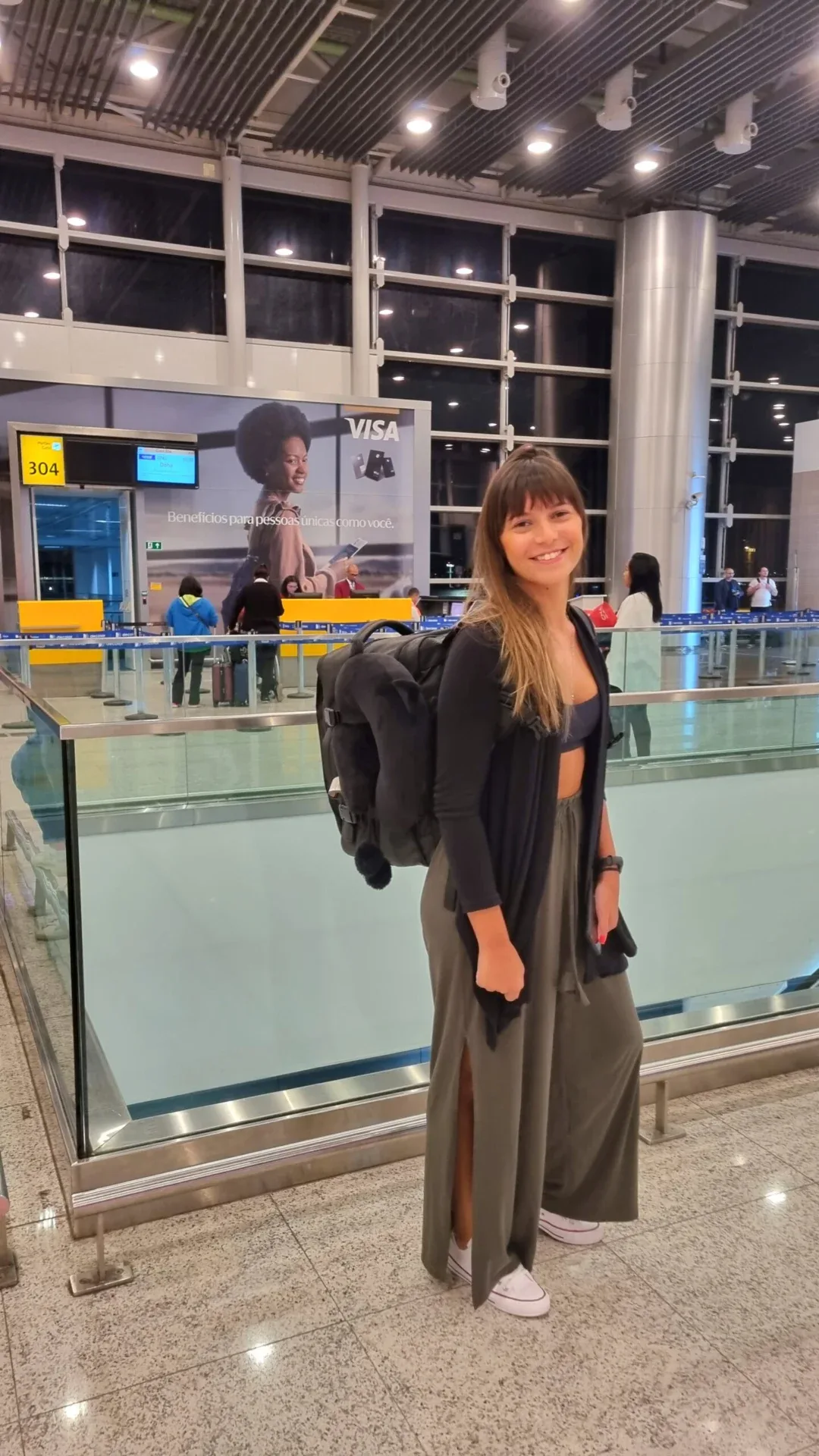
During our trips, we left and entered Thailand several times and received another authorised period when we returned.
That was our experience in 2019 and between 2022 and 2023. It should not be treated as a guarantee that repeated entries will always be accepted, since admission is decided at immigration.
Foreign travellers must also submit the Thailand Digital Arrival Card before entering. The official system currently says it should be completed within the three days before arrival and that a new submission is required for each entry. (Thailand Digital Arrival Card)
Do you need a coworking space in Thailand?
I did not.
I preferred working from our accommodation, so privacy, a suitable table, power sockets and reliable internet mattered more to me.
A coworking space or hostel may make more sense for someone travelling alone who wants to meet people and is comfortable working in common areas.
Can two people work remotely from a small studio?
Technically, yes. Whether it will feel comfortable is another question.
Our experience in Pattaya taught us that a small studio can become stressful when two people are working there for several hours every day.
For longer stays, consider privacy, calls, separate work surfaces and whether there is any division between work and rest.
Is the internet reliable enough for remote work?
It was in our experience.
We used accommodation Wi-Fi and local SIM cards without significant problems. However, we always checked recent accommodation reviews before booking.
Can you live in Thailand without riding a scooter?
Yes, especially in larger cities where taxis, ride-hailing apps and public transport are available.
More remote areas and some islands require more planning. In those places, transport should influence where you choose to stay.
Is Thailand only suitable for budget travellers?
No.
One of Thailand’s greatest advantages is that it can support very different budgets and comfort levels.
You can live simply in a bungalow, stay in a hostel and eat local food, or choose a modern apartment, private transport and a more luxurious routine.
The cost depends on the version of Thailand you decide to live.
Would I Live in Thailand Again?
Yes, without hesitation.
Thailand is one of the few places I have visited that feels like a second home.
I normally prefer visiting somewhere new rather than repeating countries, but Thailand is different. It is so large and has so many versions of daily life that I still feel there is a lot left for me to experience.
I would probably choose an island again because that is the lifestyle I connect with most.
But I also understand why Chiang Mai is such a strong base for remote workers, especially for someone who values structure, coworking spaces and community.
The biggest lesson from my experience is that you should not choose Thailand only according to the places you want to visit.
Think about the life you need to live while you are there.
What time will you work? Are you comfortable using shared spaces? Do you need privacy for calls? Are you travelling alone or with someone? Will both of you need to work? Do you want a city, an island or a quieter area? Will you need a kitchen? How much space will still feel comfortable after several weeks?
Thailand can work for someone travelling on a tight budget and for someone looking for an extremely comfortable lifestyle.
It offers both worlds.
The question is not whether Thailand has enough to offer.
It is whether you choose the version of Thailand that fits the routine you want to create.