



One of the biggest mistakes people make when planning a trip to Brazil is treating the country as if one short visit will give them a complete picture of it.
I understand why this happens. International travel content often reduces Brazil to Rio de Janeiro, Carnival, the Amazon and perhaps a few beaches in Bahia. But Brazil is much bigger and more diverse than that.
I am Brazilian, and I have travelled extensively along the Brazilian coast, spent time in different states and experienced the country both as a local and as a traveller. Even then, I would never say that I know all of Brazil.
That is because Brazil is not one simple destination. The food, climate, accent, culture, landscapes and pace of life can change considerably from one state to another.
So, is Brazil worth visiting if you do not speak Portuguese and do not know anyone in the country?
Yes, absolutely.
Brazil has incredible food, warm people, beautiful beaches, impressive natural landscapes and some of the largest cities in Latin America. You simply need to plan the trip according to the country’s size, be prepared for the language barrier and understand a few practical differences before arriving.
Here are the most important things to know before visiting Brazil, explained from a Brazilian perspective.
Brazil at a Glance
Official language: Portuguese
Currency: Brazilian real, written as R$ or BRL
Standard plug: Type N
Voltage: 110/127V or 220V, depending on the city and accommodation
Brazil does not use the same voltage everywhere. Before plugging in hair dryers, straighteners or other high-powered devices, check the voltage indicated in your accommodation and confirm that your device is compatible. Depending on where you are travelling from, you may also need a plug adapter.
Brazil Is Much Bigger Than Most Travellers Expect
Brazil covers approximately 8.5 million square kilometres and had an estimated population of 213.4 million people in 2025. It is the fifth-largest country in the world by area and is even larger than Australia.
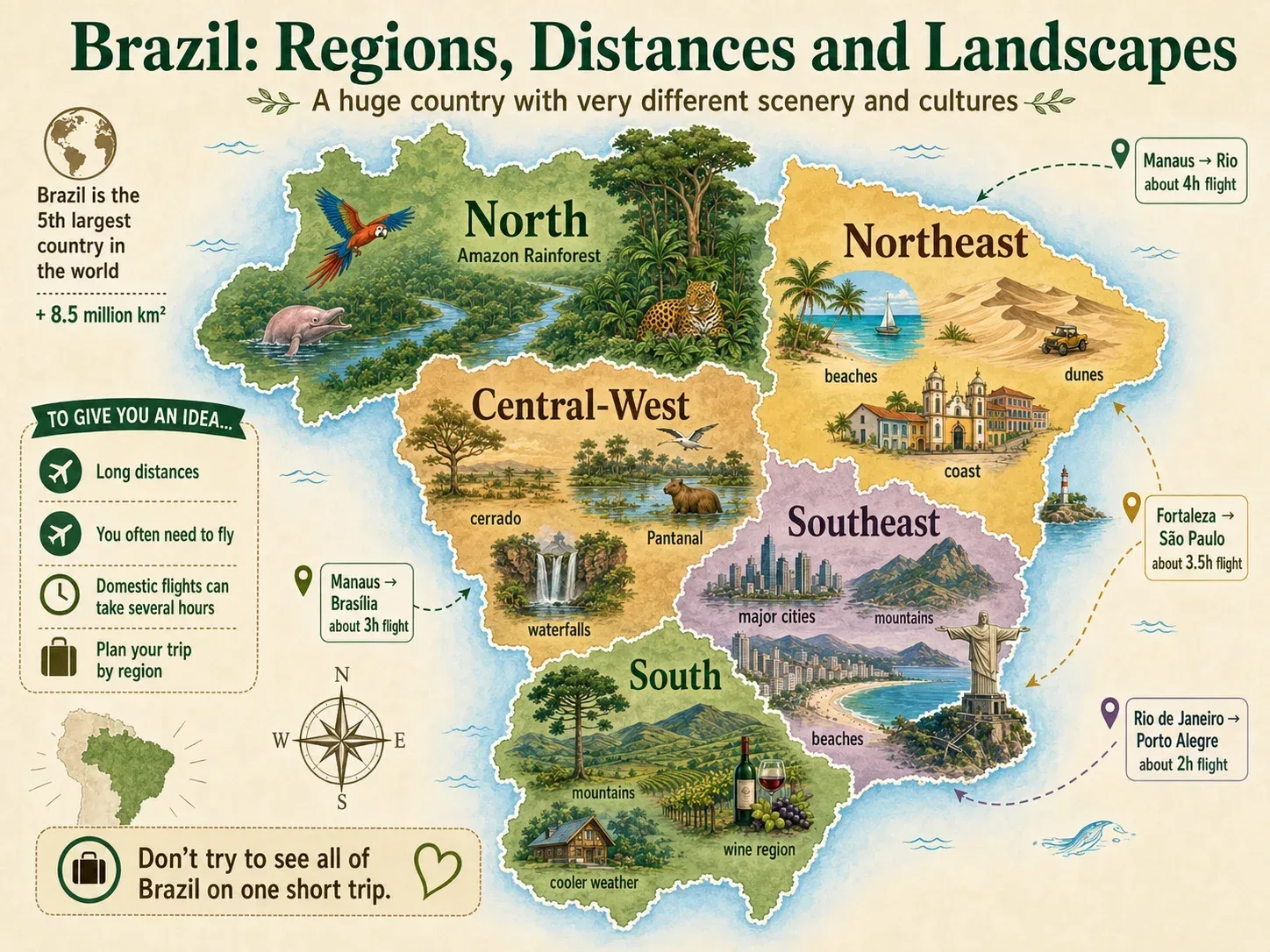
This size affects almost every part of your trip.
Two destinations that appear relatively close on a map may still require a flight, a full night on a bus or several different forms of transport. Trying to include several distant regions in one itinerary can leave you spending more time in airports and bus stations than actually experiencing the country.
A short trip can still be an excellent introduction to Brazil. It is simply better to choose one region, or a small group of well-connected destinations, instead of trying to form an opinion about the whole country from a rushed itinerary.
Every state can feel like a different trip
Brazilian culture changes significantly between states.
The food, accent, music, climate, behaviour and pace of life can all be different. Even the way Brazilians interact socially may feel warmer in some regions and more reserved in others.
This is why it is difficult to make universal statements about the country after visiting only one city.
Rio de Janeiro is not representative of the whole country. Neither is São Paulo, Bahia or the Amazon.
They are all important parts of Brazil, but each one offers a very different experience.

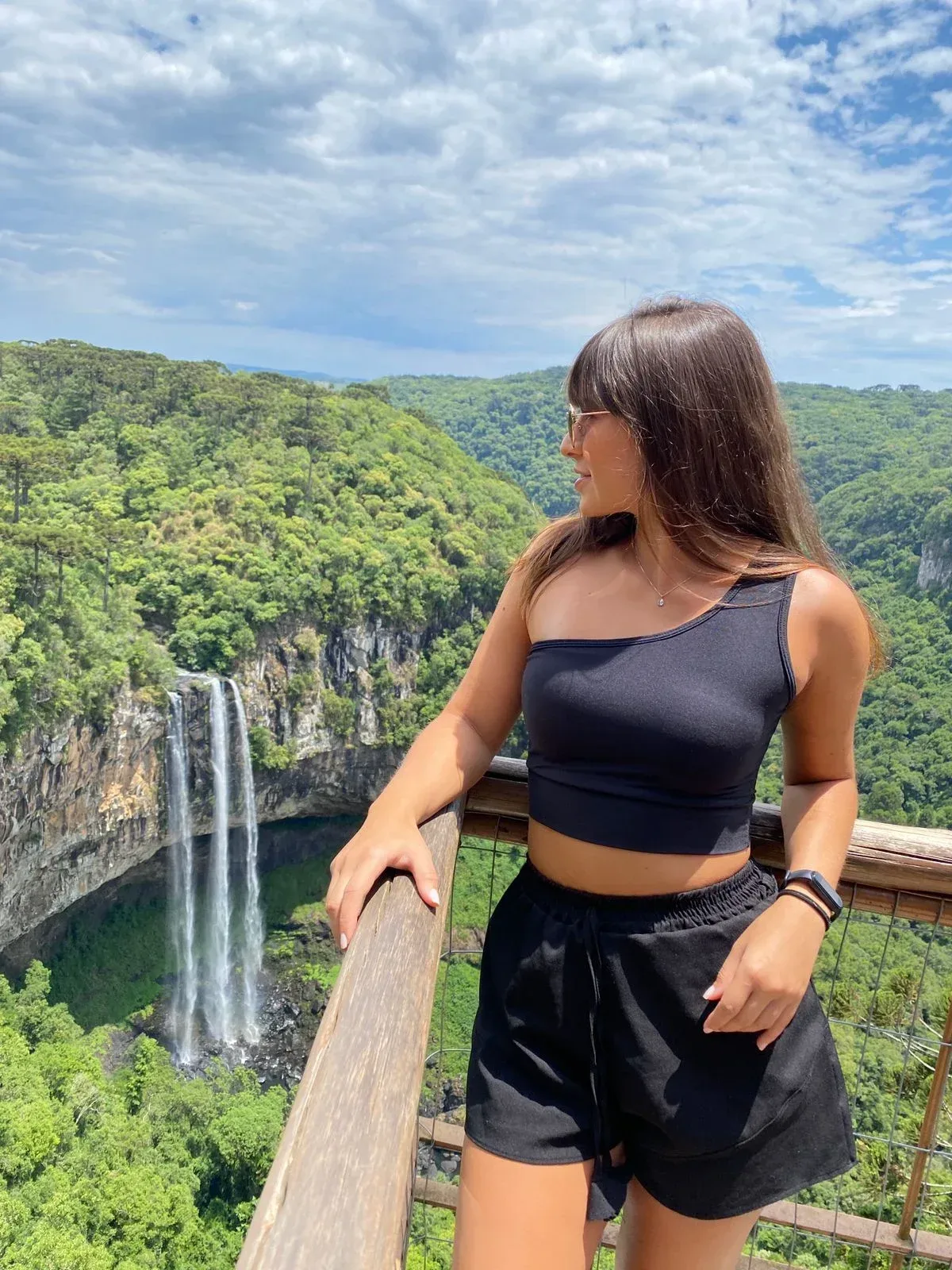
When Is the Best Time to Visit Brazil?
There is no single best time to visit Brazil because the climate changes considerably between regions.
The North generally remains warmer throughout the year, while the South can have noticeably cooler temperatures during winter. Rainy periods also vary depending on the destination, so checking the weather for each city on your itinerary is more useful than looking at one general forecast for the entire country.
Your ideal travel period will also depend on what you want from the trip. Beach holidays, city breaks, hiking trips and visits to the Amazon or Pantanal can all have different ideal seasons.
Popular destinations may become busier and more expensive during the Brazilian summer, school holidays, Carnival and major national holidays. If you plan to travel during one of these periods, book accommodation, domestic flights and long-distance transport earlier than usual.
Travelling During Carnival
Carnival can completely change the experience of visiting Brazil, but the impact depends on the city.
In destinations known for large celebrations, accommodation can sell out earlier, prices may increase and transport can become busier. Some streets may also close for parades and local events.
If Carnival is one of the main reasons for your trip, research how it works in the specific city you are visiting and book well in advance. If you are not interested in the celebrations, check whether Carnival will affect your plans before choosing your dates.
Brazil Is More Than Rio, Carnival and the Amazon
Brazil is home to around 60% of the Amazon Rainforest, but the country is not only rainforest, beaches and small rural communities.
Brazil also has enormous cities, modern neighbourhoods, major universities, technology companies and restaurants representing cuisines from around the world.
São Paulo alone had an estimated population of approximately 11.9 million people in 2025, making it the most populous municipality in Brazil.
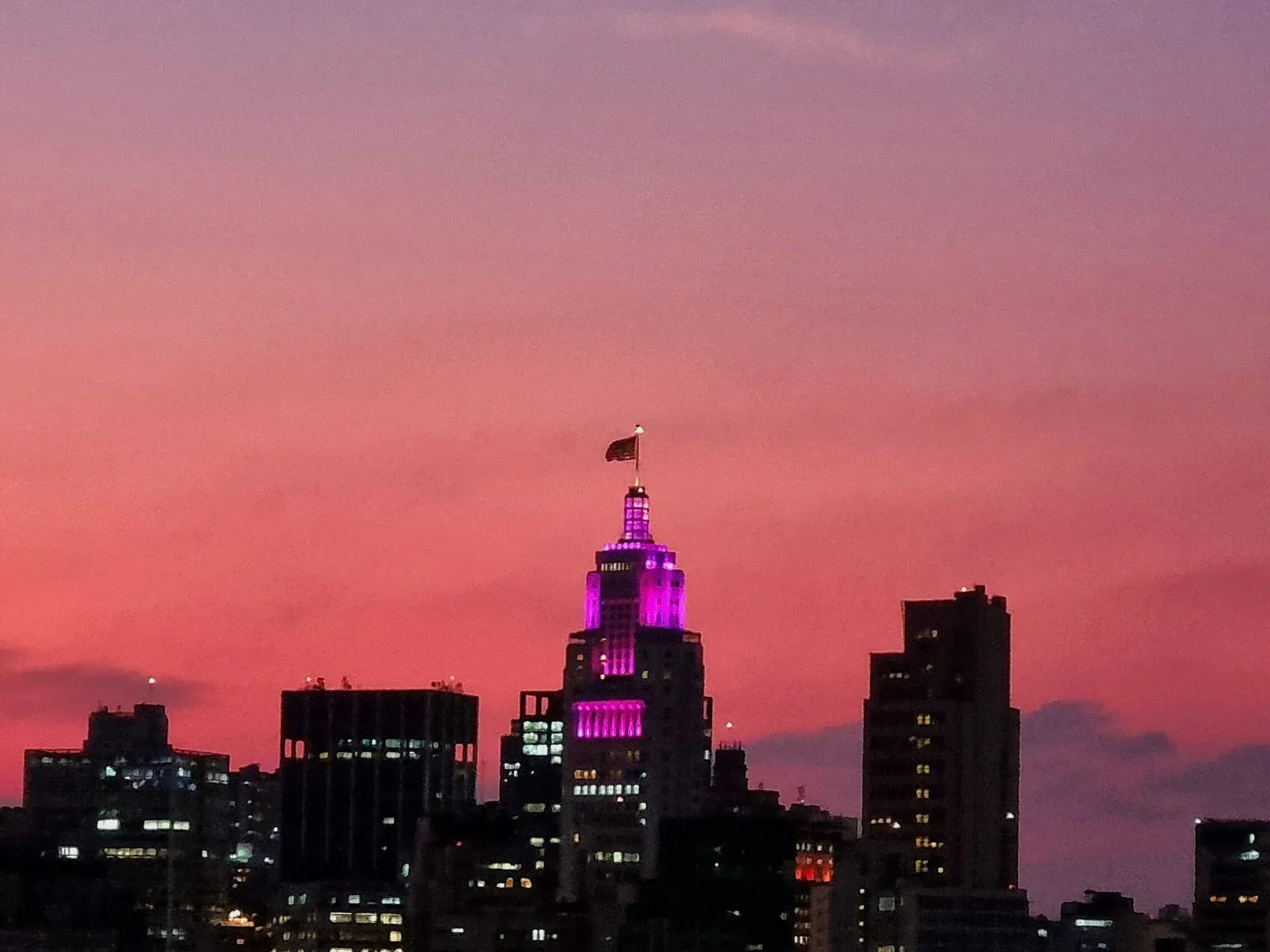
Samba and football are important parts of Brazilian culture, but they do not define every Brazilian. You should not assume that everyone knows how to samba, plays football or wants to spend the entire conversation talking about either one.
The same applies to other common ideas about the country. Brazil is not limited to Rio de Janeiro, Bahia, Carnival or the Amazon.
You should approach Brazil with curiosity, not with a collection of stereotypes that you expect local people to perform for you.
Do People Speak English in Brazil?
You should not travel to Brazil expecting everyone to speak English.
In international hotels, airports, major attractions and popular tourist areas, you have a better chance of finding someone who can communicate in English. Outside those environments, communication may be more difficult.
However, the language barrier does not need to stop you from visiting.
Even when Brazilians do not speak English, many people will try to help through gestures, another person nearby or a translation app.
The easiest solution is to have Google Translate available on your phone. Download Portuguese for offline use before your trip so that you can still communicate when your internet connection is unstable.
Brazilians do not speak Spanish
Brazil’s official language is Portuguese, not Spanish.
Some Brazilians may understand basic Spanish when it is spoken slowly. They may also try to respond using a mixture of Portuguese and Spanish, informally known as portunhol.
Still, they are different languages. Spanish might help with a simple conversation, but Google Translate is generally more reliable.
Brazilian Portuguese also differs from European Portuguese in pronunciation, vocabulary and everyday expressions.
Useful Portuguese phrases for your trip
A few basic phrases can make interactions easier:
- Olá: Hello
- Por favor: Please
- Obrigado: Thank you, if you are a man
- Obrigada: Thank you, if you are a woman
- Desculpa: Sorry
- Com licença: Excuse me
- Eu não falo português: I do not speak Portuguese
- Você fala inglês?: Do you speak English?
- Você pode me ajudar?: Can you help me?
- Onde fica…?: Where is…?
- Quanto custa?: How much does it cost?
- Aceita cartão?: Do you accept cards?
- Uma água, por favor: One water, please
- Sem pimenta, por favor: No chilli, please
- A conta, por favor: The bill, please
Trying to say even a few words in Portuguese is usually appreciated and can make the interaction feel much easier.
Is Brazil Safe for Tourists?
Brazil requires some practical awareness, but that does not mean you will be robbed everywhere you go or that you need to spend your entire trip feeling afraid.
The reality changes considerably depending on the city, neighbourhood and time of day.
I have visited Brazilian coastal towns where I felt comfortable walking at night and using my phone in public. I have also visited larger cities where I would be more careful about doing the same thing.
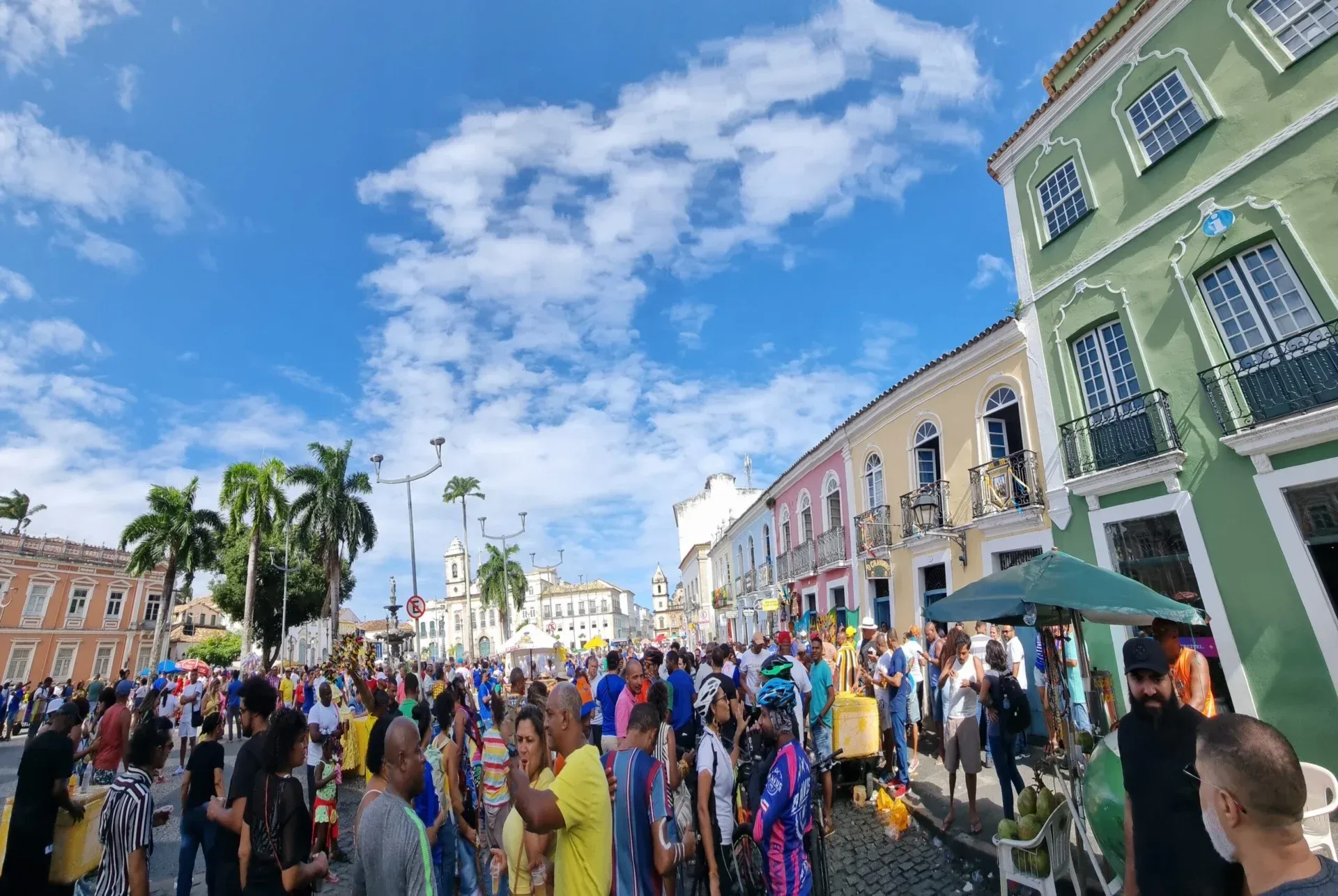
The problem is not asking whether Brazil is safe. The problem is generalising the entire country as if no place in Brazil were safe.
Safety changes by city and neighbourhood
A city can be generally comfortable for visitors while still having specific areas that are better avoided.
When you arrive, ask someone at your accommodation which neighbourhoods or streets they recommend avoiding, particularly at night.
In historical centres, unfamiliar neighbourhoods or quiet streets late at night, it may be better to use a ride app instead of walking alone.
Local advice will usually be more useful than a broad statement about the entire country.
Simple habits that can make the trip easier
You do not need to look frightened or hide your phone every second. It is simply worth being aware of your surroundings.
Avoid leaving expensive belongings unnecessarily exposed, especially on busy streets or public transport. At the beach, keep your phone and wallet inside your bag instead of leaving them visible while you go into the sea.
Uber and 99 can be useful when you do not feel comfortable walking or when you arrive somewhere late at night.
99 is another widely used ride app in Brazil and works as an alternative to Uber. Prices can differ between the two apps, so it is worth checking both before requesting a car.
These are simply practical points to be aware of. They should help you feel more prepared, not discourage you from visiting.
Explore the destination with reliable local tours
Joining an organised activity can be an easy way to understand a new destination, especially when you do not speak Portuguese.


You can find guided tours and activities through platforms such as GetYourGuide and Civitatis. Another option is to ask your hotel, hostel or accommodation host for a local company they trust.
This allows you to explore with more context, understand what you are seeing and avoid the uncertainty of accepting the first tour offered on the street.
How to Travel Around Brazil
Always check the real travel time between destinations before building your itinerary.
A route that appears simple on a map may involve a night bus, a flight connection or several local transfers.
I often use Rome2Rio during the planning stage because it shows possible combinations of flights, buses, ferries and local transport. It is useful for understanding whether a route is realistic before booking it.
Domestic flights
The main airlines you will commonly find when searching for domestic flights in Brazil are:
- LATAM
- GOL
- Azul
These three airlines represent most of Brazil’s domestic air market. Smiles is GOL’s loyalty programme, not a separate airline, although you may see it when searching for flights using points or miles.
Flights can save a significant amount of time when travelling between distant regions. However, smaller destinations may still require a bus, car or transfer after the flight.
Travelling by bus
Long-distance buses are common in Brazil and can be a practical option between cities in the same region.
The bus company will depend on your route. Some names you may see include:
- Clickbus
- Buser
Instead of searching every company separately, you can use a booking platform such as ClickBus to compare routes, departure times and operators. ClickBus currently works with more than 200 bus companies and thousands of destinations across Brazil.
For longer distances, compare the bus duration with the total cost of a flight. A bus may be cheaper, but it can also take an entire day or night.
Check your airport transport before arriving
When you leave the airport, you may be approached by taxi drivers offering an immediate ride.
I prefer checking Uber and 99 first because the apps show the route and estimated price before the journey. This gives you a reference and helps you decide which option makes more sense.
Depending on the destination, renting a car may also be useful, especially when visiting beaches, smaller towns or places with limited public transport.
Localiza and Movida are two major rental companies with locations at airports and in cities around Brazil.
Always check the rental conditions, insurance and documentation requirements before confirming the booking.
Using public transport
Public transport systems are managed locally, so the payment method varies from one city to another.
Depending on the destination, you may pay with:
- Cash
- A single ticket
- A QR Code
- A rechargeable local transport card
- A card designed for visitors
For example, São Paulo’s metro offers single tickets using QR Codes, while Rio de Janeiro has transport cards and visitor-focused options.
Public transport can be simple to use once you understand the local system. However, when you first arrive with luggage and are tired from the journey, taking an Uber, 99 or prearranged transfer directly to your accommodation may be more convenient.
How to Pay for Things in Brazil
Cards are widely accepted in Brazilian cafés, restaurants, supermarkets, pharmacies and many smaller establishments.
You will frequently be asked:
Débito ou crédito?
This means:
Debit or credit?
I would not recommend arriving with a large amount of cash. I prefer using an international card and withdrawing a small amount of Brazilian reais after arriving.
I personally use Revolut and Nomad. Revolut can be particularly useful when travelling across several countries because it supports more currencies.
Always have a second card or payment method available. Small businesses, remote locations or temporary connection problems may occasionally make card payments unavailable.
Before confirming a payment, check the amount displayed on the card machine.
A quick note about Pix
Pix is one of the most common payment methods in Brazil, so you will see its name everywhere.
However, short-term foreign visitors should not depend on it. Pix payments are normally made through compatible Brazilian bank or payment accounts, which most tourists will not have.
International cards and a small amount of cash will usually be easier.
How to Get Mobile Internet in Brazil
Having internet on your phone will make your arrival much easier, particularly for using maps, translation and ride apps.
Brazil’s major local mobile operators include TIM, Claro and Vivo.
The simplest local option currently available for many visitors is Vivo’s Tourist Plan. It uses an eSIM, can be purchased using a passport and can be installed before arriving in Brazil.
TIM also allows international visitors to activate a prepaid line using their passport and Brazilian accommodation address.
Claro is another major provider, although the exact activation process may depend on the product or store.
For an even simpler setup, particularly when you do not need a Brazilian phone number, you can buy an international eSIM before travelling. Holafly currently offers eSIM plans for Brazil that can be installed using a QR Code before or during the trip.
Before buying any eSIM, confirm that your phone is compatible and unlocked.
Brazilian Customs That May Surprise You
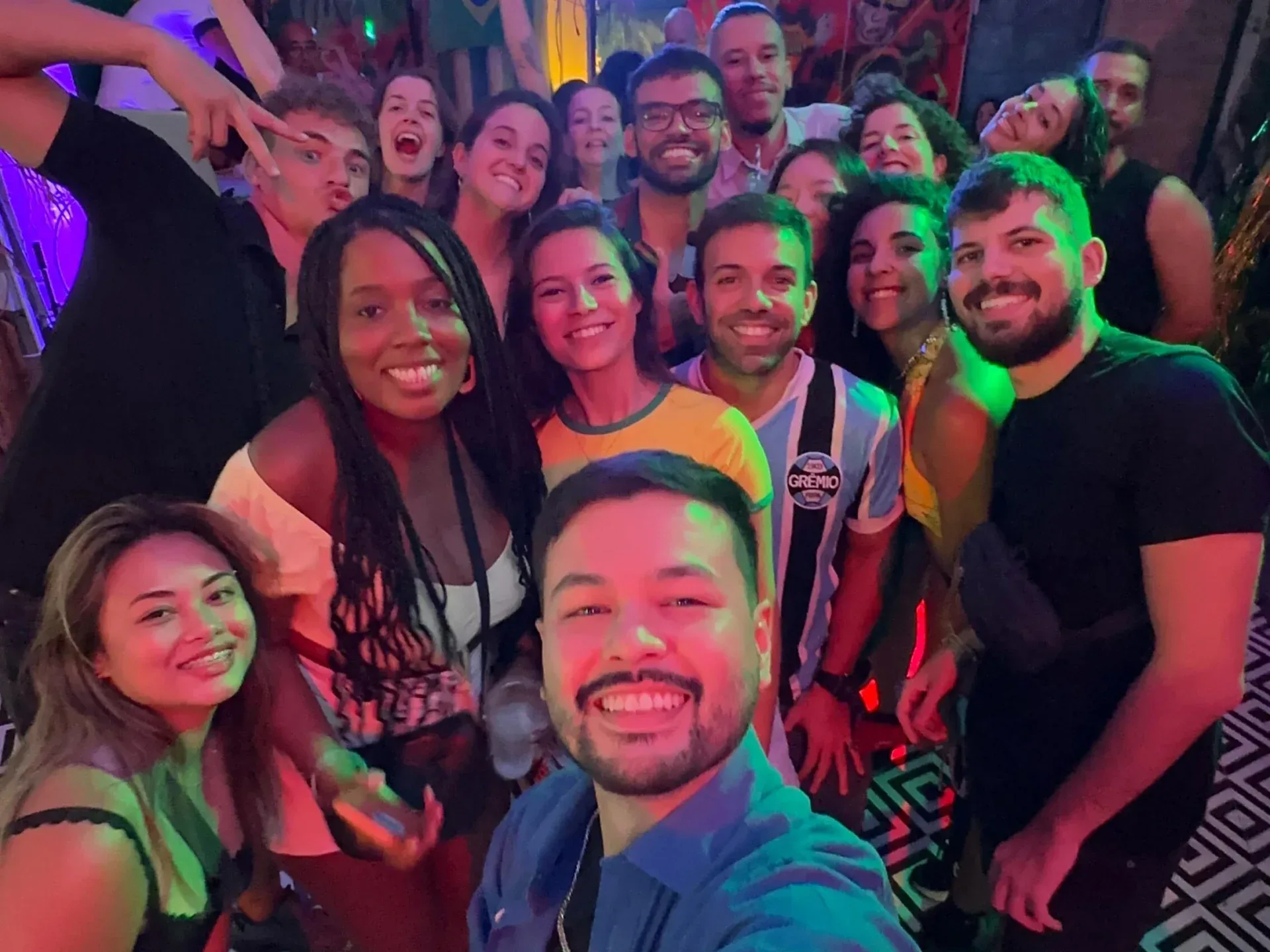
Brazilian culture can involve more physical contact than some European, North American or Asian cultures.
Depending on the region and situation, someone may greet you with a hug or a kiss on the cheek.
If you prefer less physical contact, you can simply offer a handshake or communicate your preference. Most people will understand.
Social times can be flexible
Brazil is generally less strict about timing in casual social situations.
When someone invites you to an informal party or gathering, the stated time may not mean that everyone will arrive at that exact minute.
This does not apply to flights, tours, airport transfers or professional commitments. For those, arrive on time.
Restaurant service charges are optional
Many restaurant bills include a suggested service charge, commonly 10%.
This payment is optional. You can ask for it to be removed, particularly if you were unhappy with the service.
You are not generally expected to add another large tip when a service charge has already been included and paid.
Follow the bathroom instructions
Many bathrooms in Brazil have a small bin beside the toilet for used toilet paper.
Plumbing conditions vary between buildings, so follow the instructions at your hotel or accommodation instead of assuming that every property works in the same way.
What to Know About Food in Brazil
Brazilian food is still my favourite cuisine, even after travelling to many countries.
The cuisine changes significantly between regions, so what you eat in Bahia may be completely different from what you find in Minas Gerais, São Paulo, Pará or Rio Grande do Sul.
Brazil also has several common restaurant formats.
At a restaurante por quilo, you serve yourself from a buffet and pay according to the weight of your plate.
At a buffet livre, you pay a fixed amount and can usually eat as much as you want.
A rodízio is another all-you-can-eat format where food is brought to your table repeatedly. You can find rodízios in churrascarias, pizza restaurants and sushi restaurants.
Brazilian foods and drinks worth trying
What you should eat will depend on the region, but a few classics include:
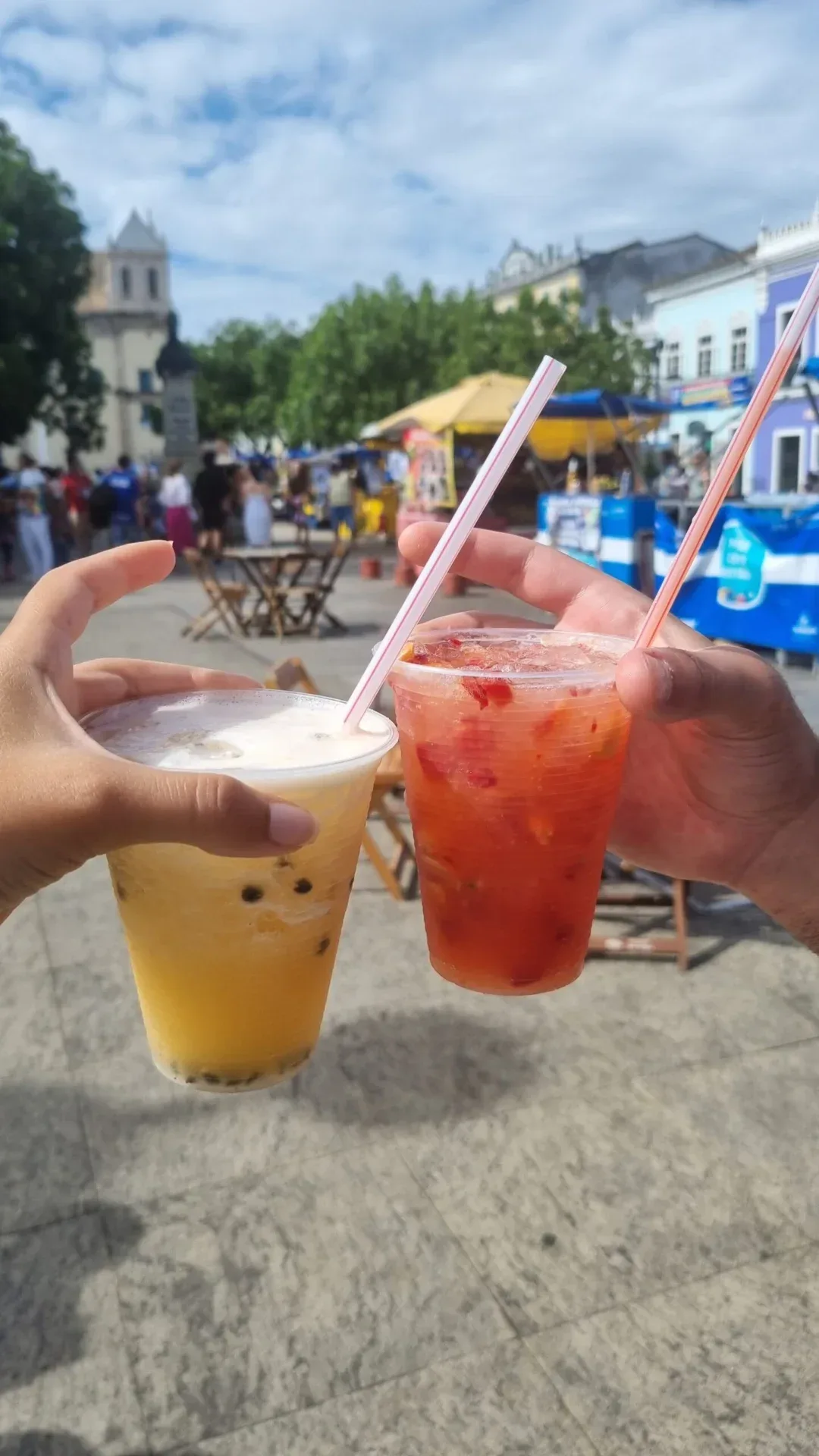
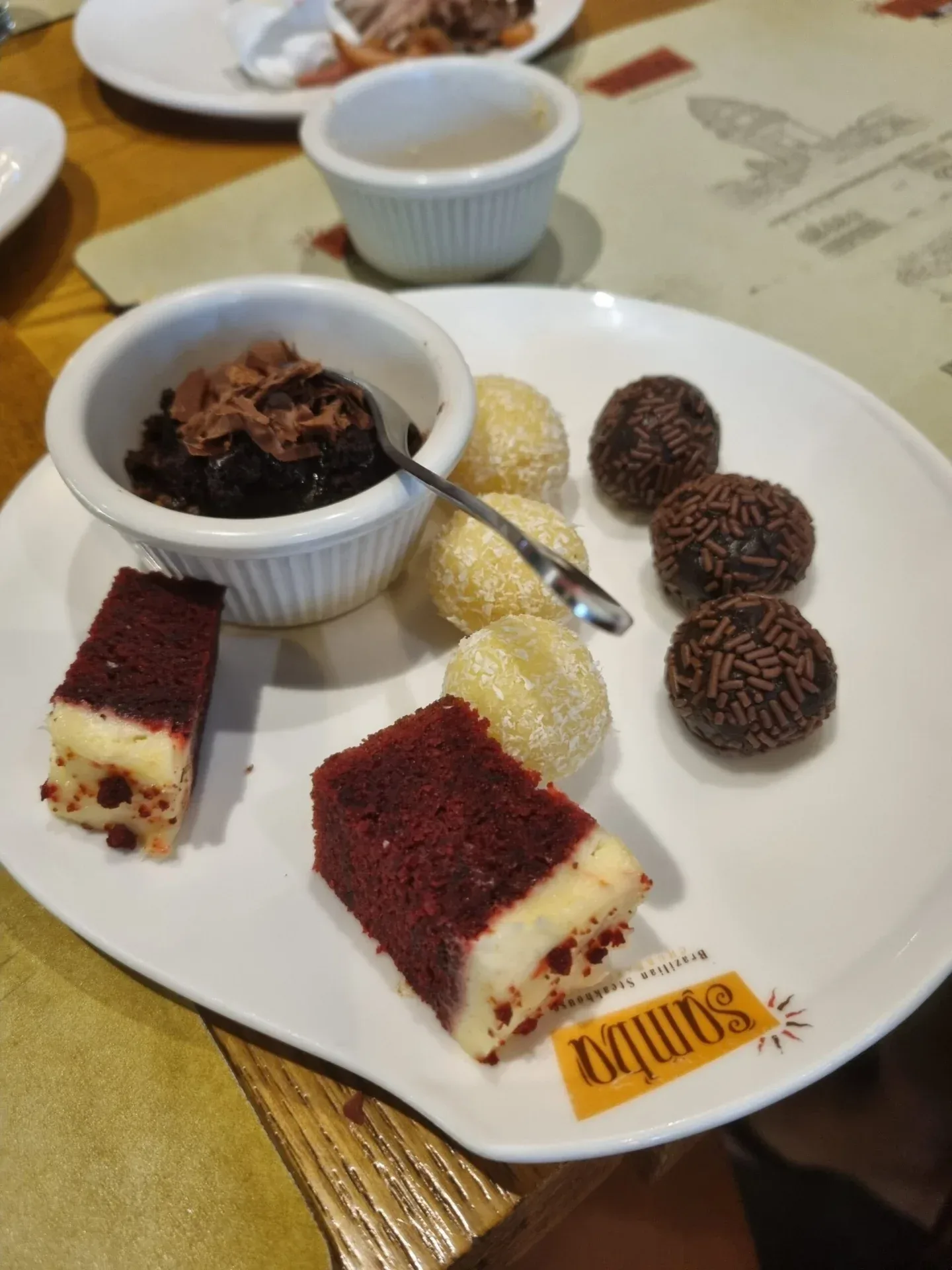
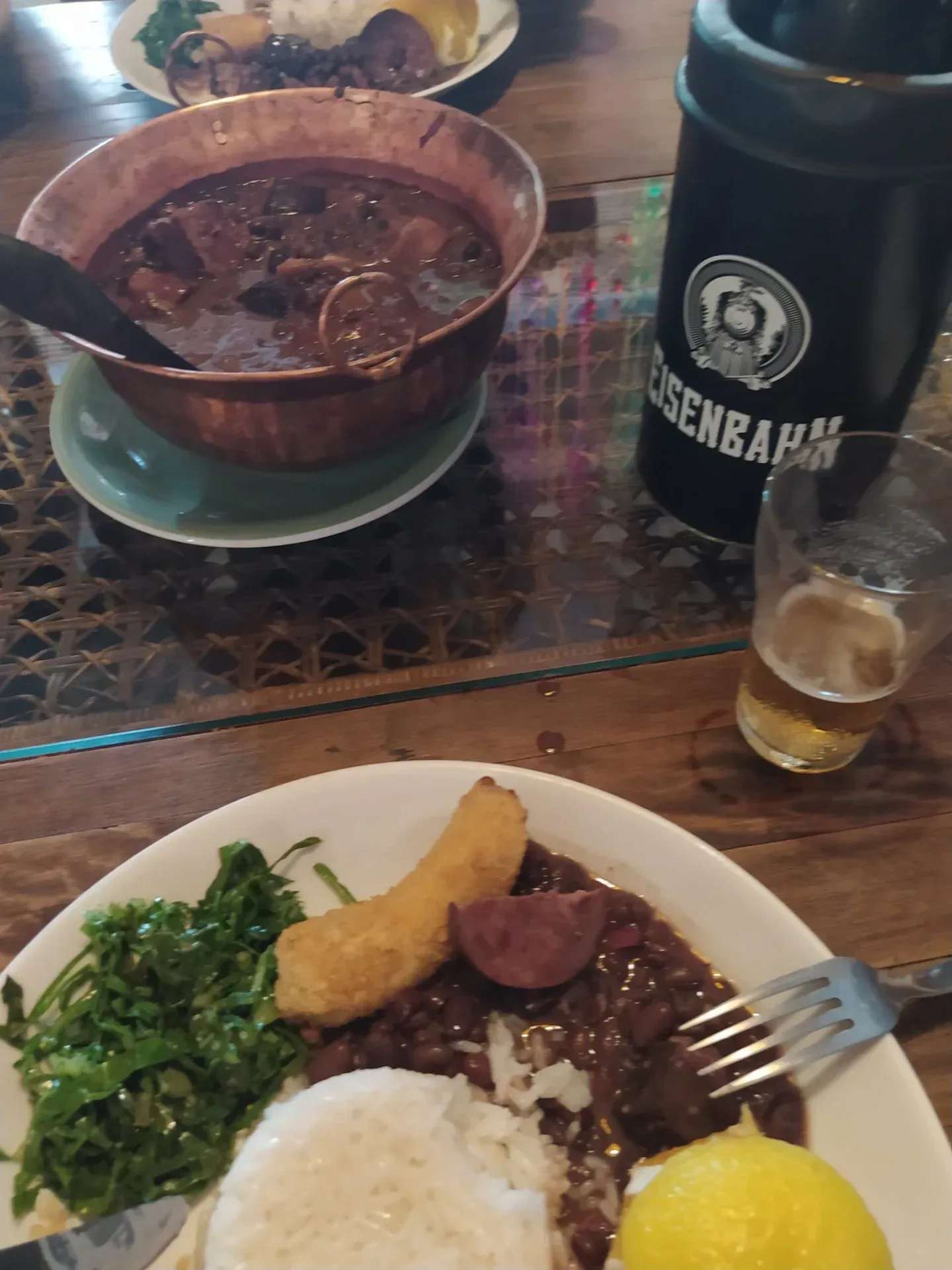
- Pão de queijo: Small cheese breads, especially associated with Minas Gerais
- Feijoada: A rich black bean and meat dish
- Caipirinha: Brazil’s classic cocktail made with cachaça, lime and sugar
- Brigadeiro: A soft chocolate sweet made with condensed milk
- Beijinho: A coconut sweet commonly served at celebrations
- Pão na chapa com requeijão: Toasted bread with Brazilian-style creamy cheese, particularly worth trying at a traditional São Paulo bakery
- Brazilian hot dog: Usually much more elaborate than versions found in other countries
Try visiting a traditional Brazilian padaria for breakfast. Bakeries are a major part of everyday life in many Brazilian cities and often serve coffee, bread, sandwiches, fresh juice, sweets and full meals.
Brazilian hot dogs are also worth trying because each state tends to create its own version. Depending on where you are, the toppings may include corn, peas, mashed potato, cheese, sauces, potato sticks and other ingredients.
Check the Entry Requirements for Your Nationality
Entry requirements depend on your nationality, passport and reason for travelling.
Do not assume that the same rule applies to every visitor. Check Brazil’s official visa information before booking and again before departure.
As of July 2026, passport holders from the United States, Canada and Australia need a visitor visa, with an electronic visa process available for eligible visits. This requirement returned on 10 April 2025.
Health recommendations can change depending on the regions included in your itinerary, so check official guidance before travelling.
Brazil does not generally require foreign tourists to present proof of yellow fever vaccination when entering the country. However, the vaccine is recommended for travellers visiting areas where vaccination is advised. When necessary, it should be taken at least 10 days before the trip so that there is enough time for protection to develop.
It is also worth checking whether your routine vaccinations are up to date and packing insect repellent, especially when visiting warmer, tropical or rural areas. Travel insurance can also be useful, particularly if your itinerary includes remote destinations or outdoor activities.
Check the latest recommendations from Brazil’s Ministry of Health or speak to a healthcare professional before departure, as the appropriate preparation will depend on your health and itinerary.
A Few Things to Keep in Mind
Brazil can be a very easy country to enjoy when you arrive with realistic expectations.
Leave some space in your itinerary instead of connecting too many distant places. Check how you will travel between destinations before booking accommodation. Keep a translation app available and ask local people for recommendations when you are unsure.
It is also worth accepting that procedures may change between cities. The transport card, airport connection or mobile plan that works in one destination may be completely different in another.
That variation is part of travelling through a country as large and diverse as Brazil.
Who Is Brazil a Good Destination For?
Brazil is a great option for travellers who want a culture that feels different, beautiful beaches, natural landscapes, large cities and a huge variety of food.
It is particularly rewarding for people who are open to using translation, adapting their plans and exploring a smaller region with more time.
The trip may be more challenging if you depend completely on English, expect every part of the journey to be highly predictable or try to visit several distant states in a short period.
More than anything, Brazil is for travellers who arrive with an open mind.
If you become friends with a Brazilian, ask them to show you the bar they actually visit, the beach they prefer or the restaurant where they normally have lunch.
Those ordinary experiences may show you a side of Brazil that no list of famous attractions can reproduce.
Is Brazil Worth Visiting?
Yes, Brazil is absolutely worth visiting.
It is not a country that can be summarised by one city, one region or one short experience.
Your trip will be better if you choose fewer destinations, prepare for the language barrier and understand that the experience can change completely from one state to another.
Brazil has some of the best food I have ever eaten, landscapes that range from rainforest and waterfalls to warm beaches and enormous cities, and people who will often try to help you even when they do not speak your language.
And if you visit Brazil and need advice, you can message me on Instagram. I would be happy to help you plan your trip and experience a more authentic side of the country.
Continue reading:
- Things to Do in João Pessoa, Brazil: Beaches, Day Trips and What’s Actually Worth It
- How to Get Your First House Sit on TrustedHousesitters
- Brazil Itinerary: How to Plan a Realistic Trip by Region
- Living in Portugal as a Digital Nomad: My Honest Experience
- Best Apps for Digital Nomads: Tools I Use After 4 Years of Full-Time Travel